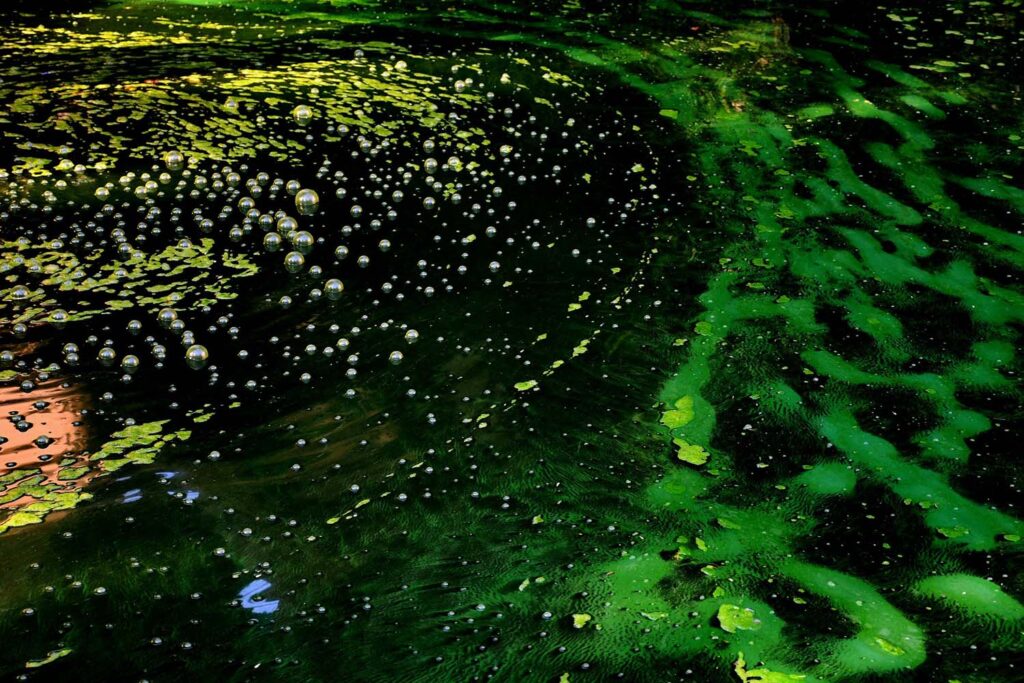
Seville is the capital and largest city of Andalusia in south west Spain.
THE CATHEDRAL
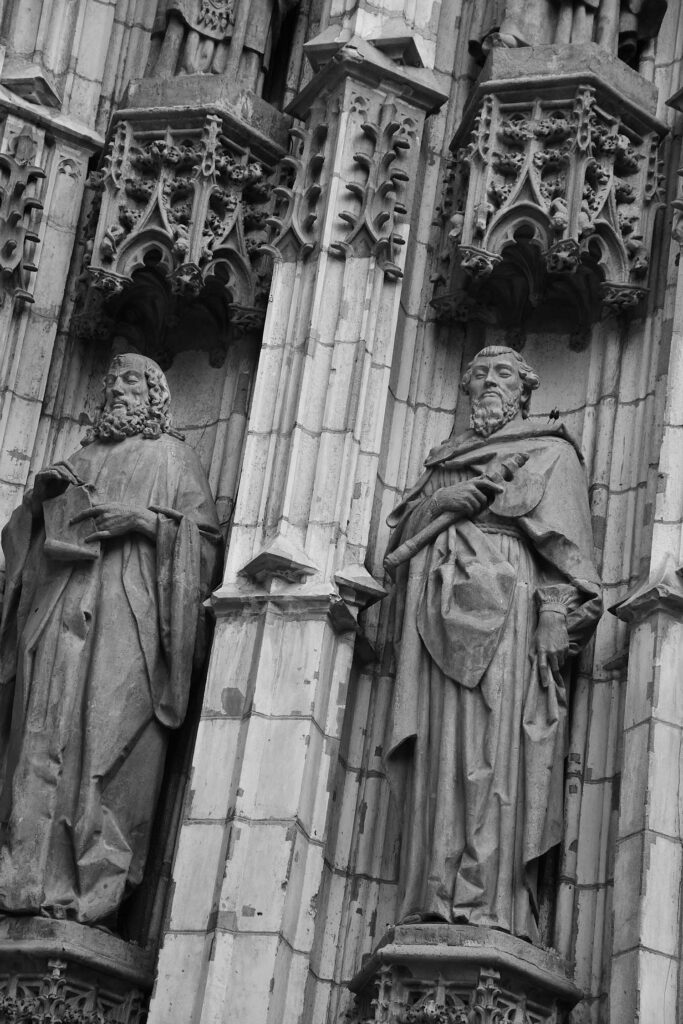
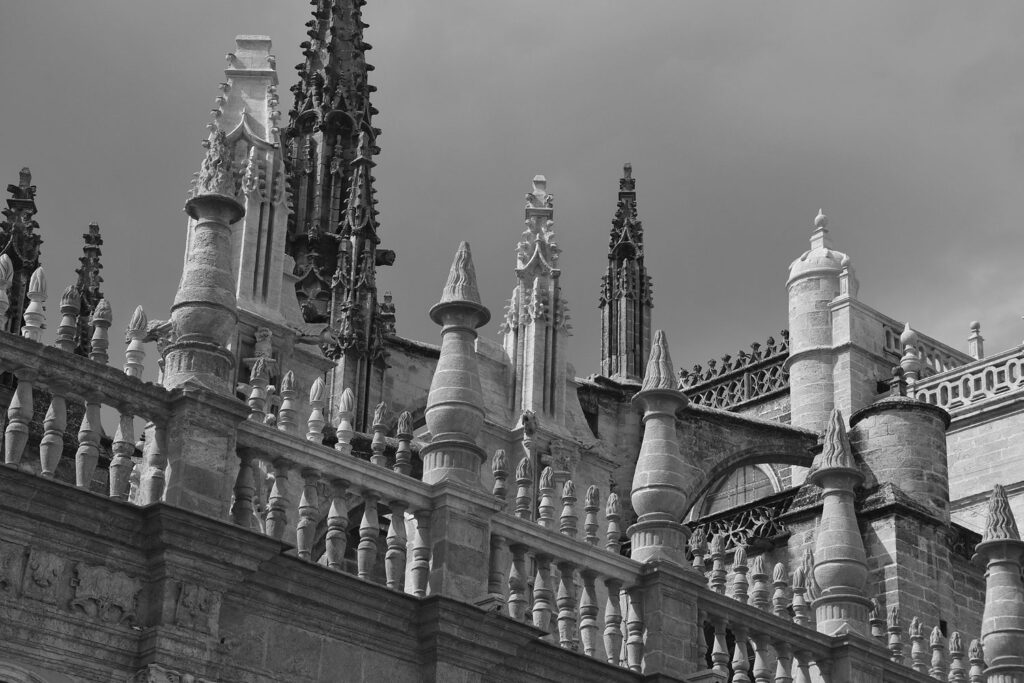
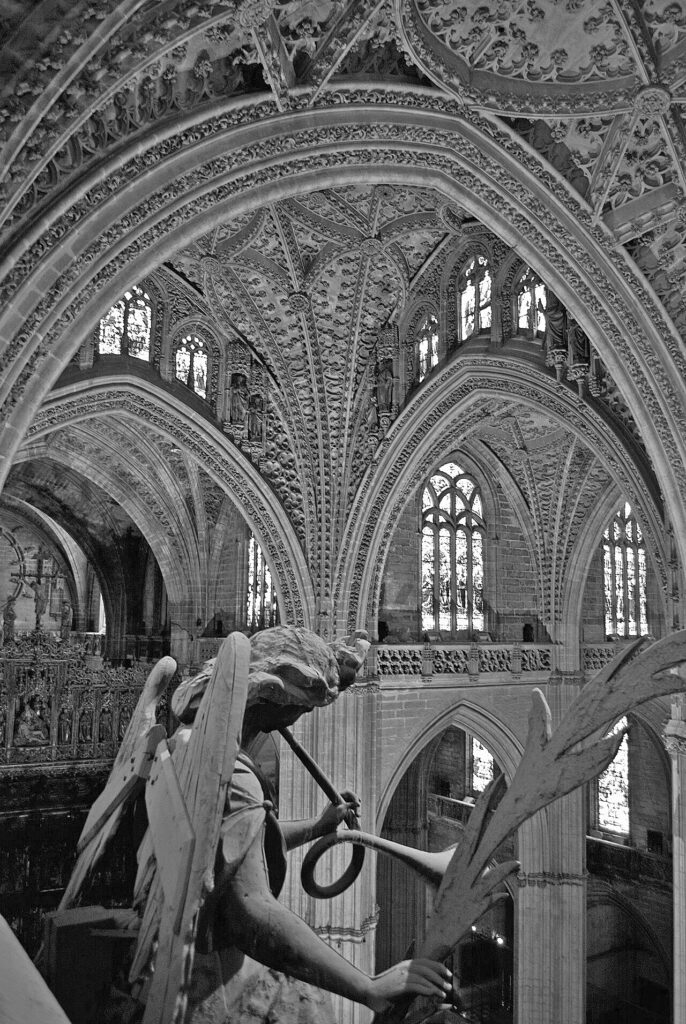
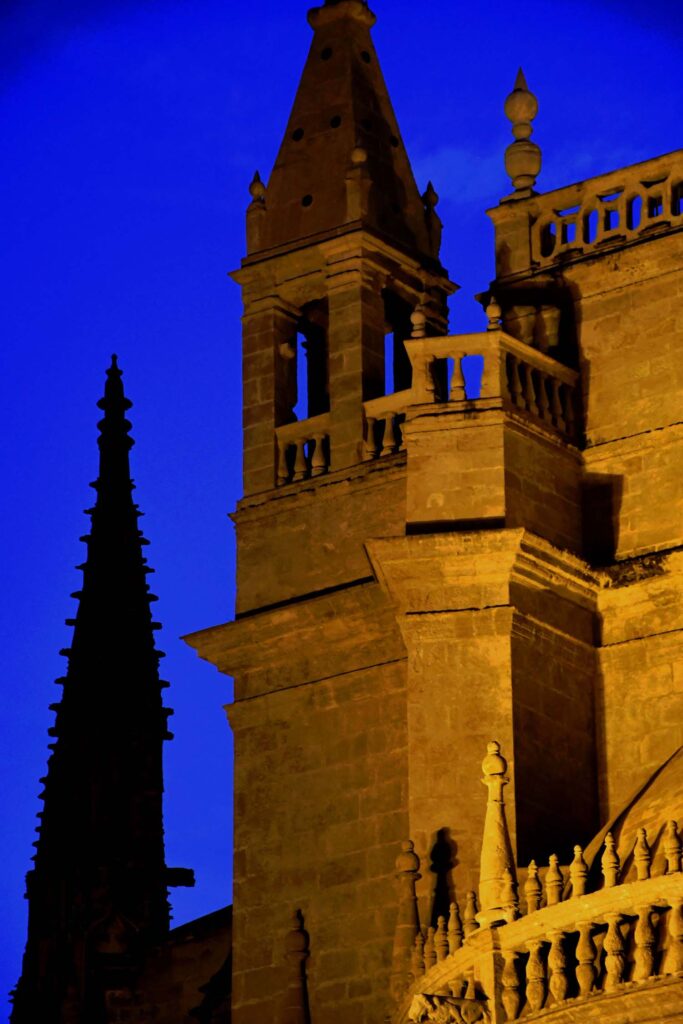
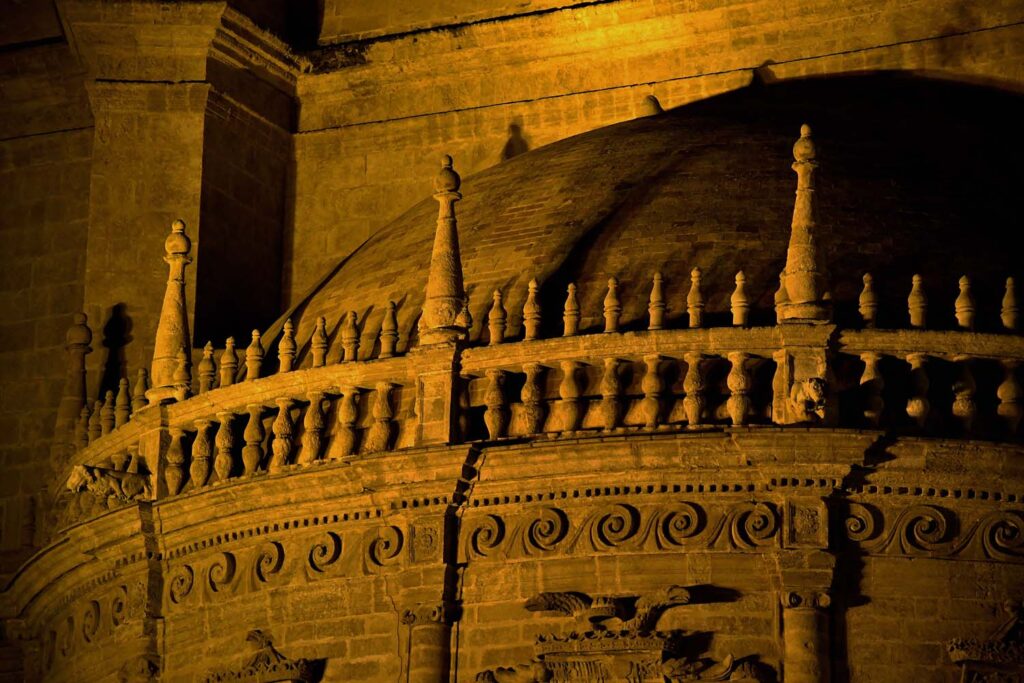
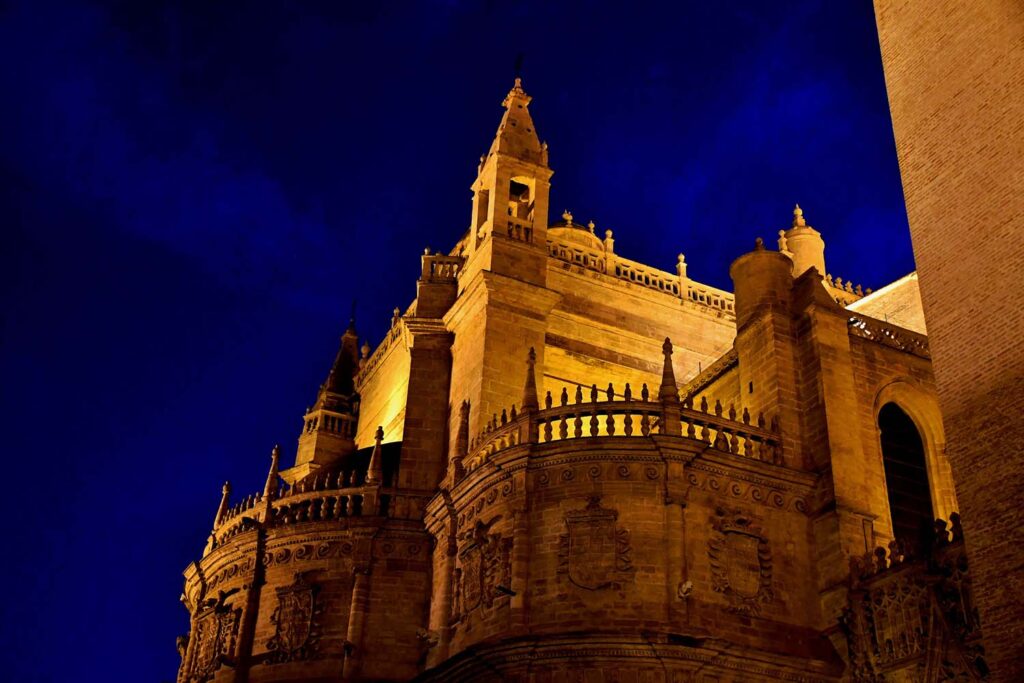
The Cathedral of Saint Mary of the See was registered in 1987 by UNESCO as a World Heritage Site, along with the adjoining Alcázar Palace complex and the General Archive of the Indies.It is one of the largest churches in the world and the largest Gothic cathedral.
After its completion in the early 16th century, Seville Cathedral supplanted Hagia Sophia as the largest cathedral in the world, a title the Byzantine church had held for a thousand years.The Gothic section alone has a length of 126 m (413 ft), a width of 76 m (249 ft), and a central nave height of 36 m (118 ft) (40 m (130 ft) at the crossing).
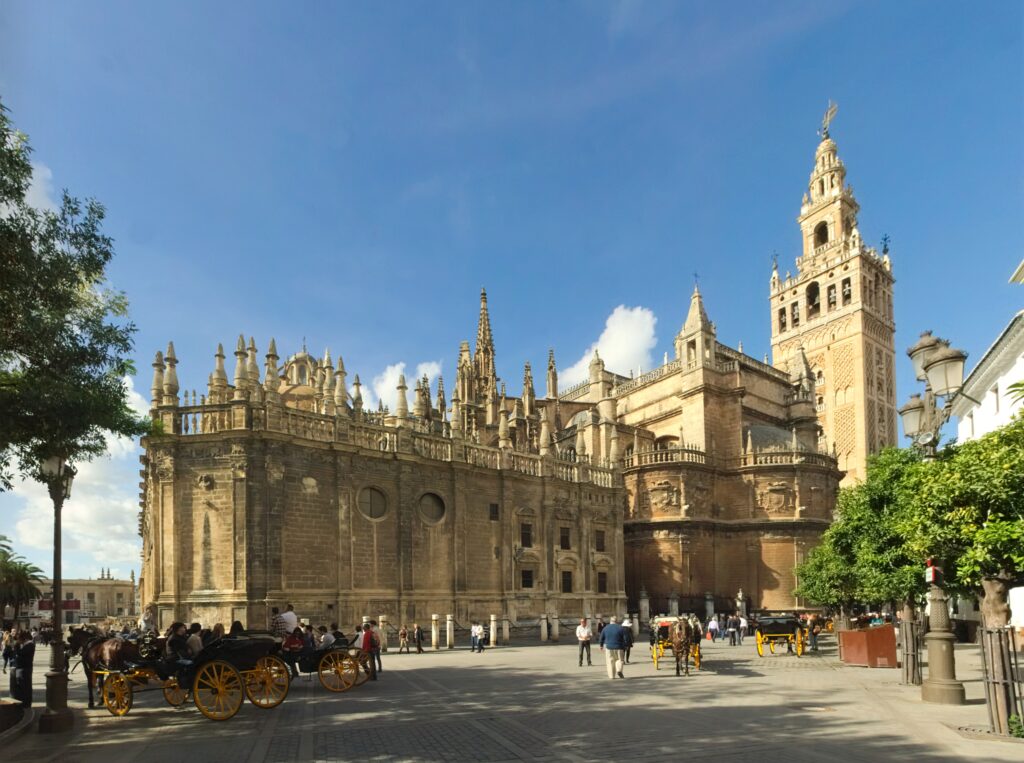
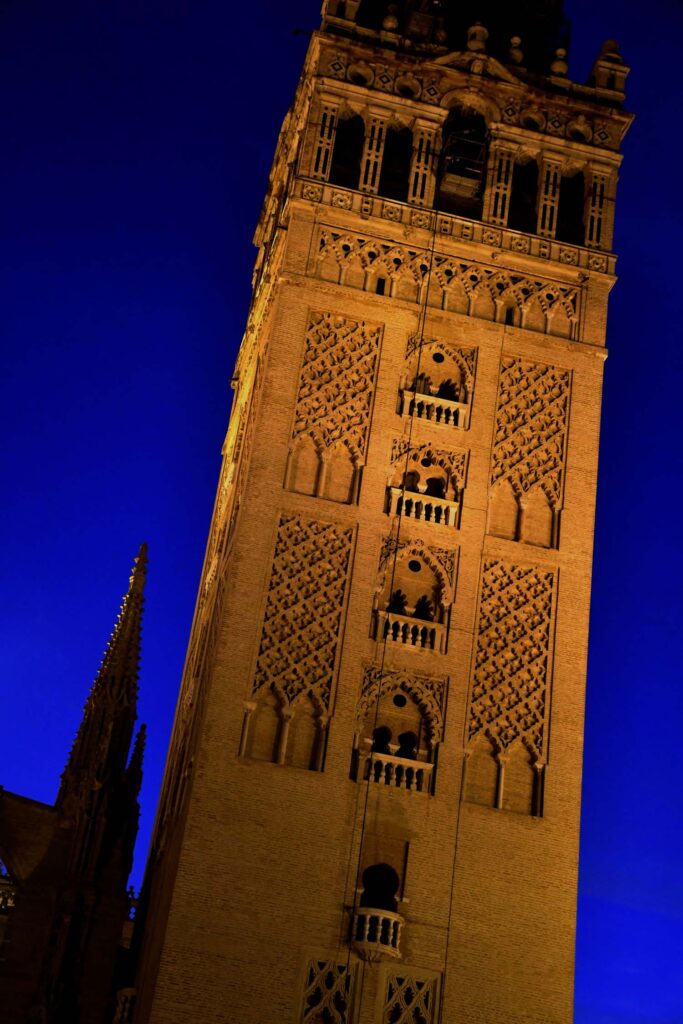
The Giraldi Tower adjacent to the Cathedral sans scaffolding which it has while I was there.
(Photo above courtesy of Wikipedia)
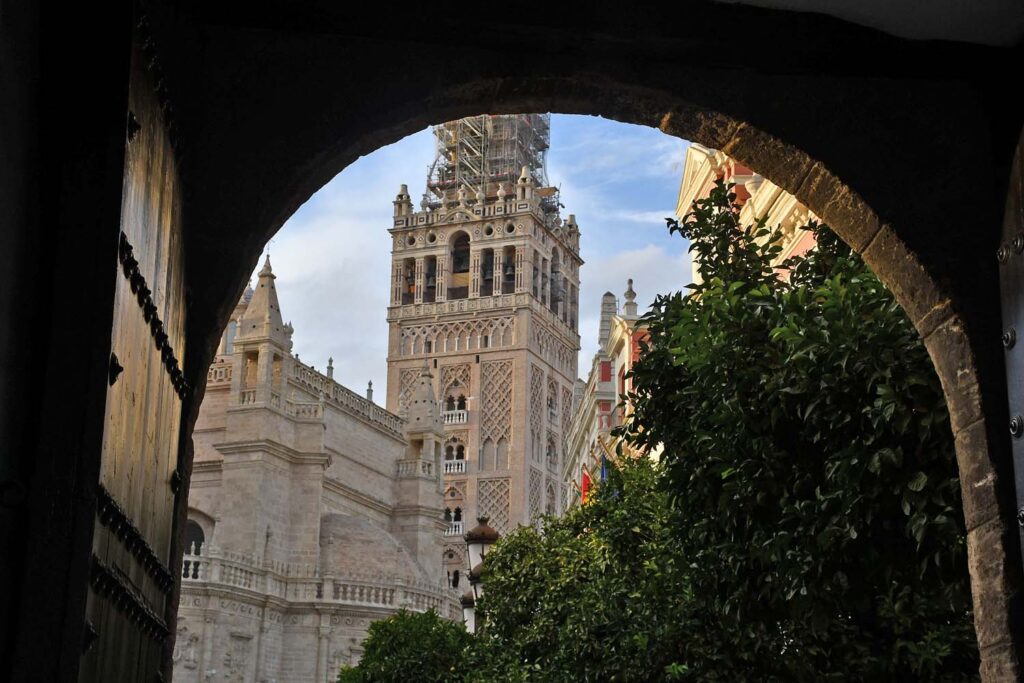
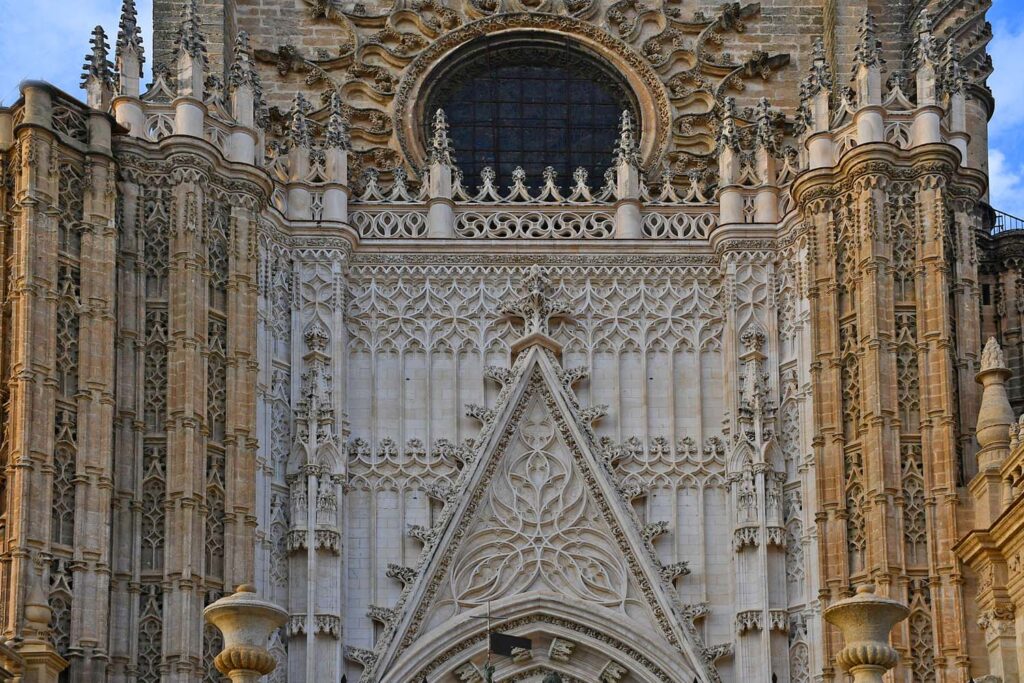
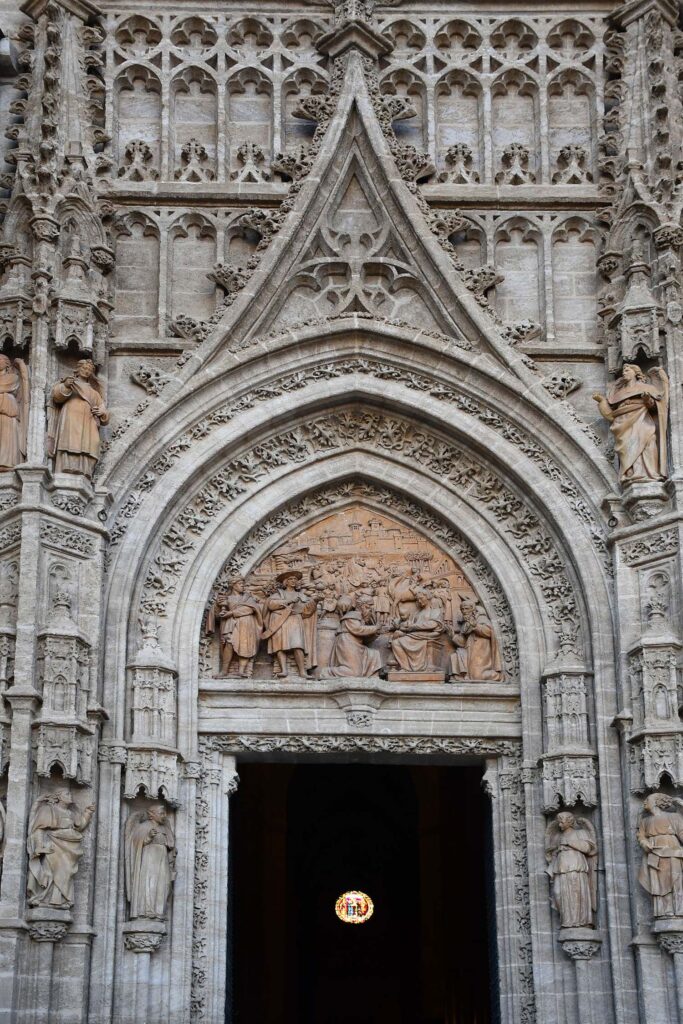
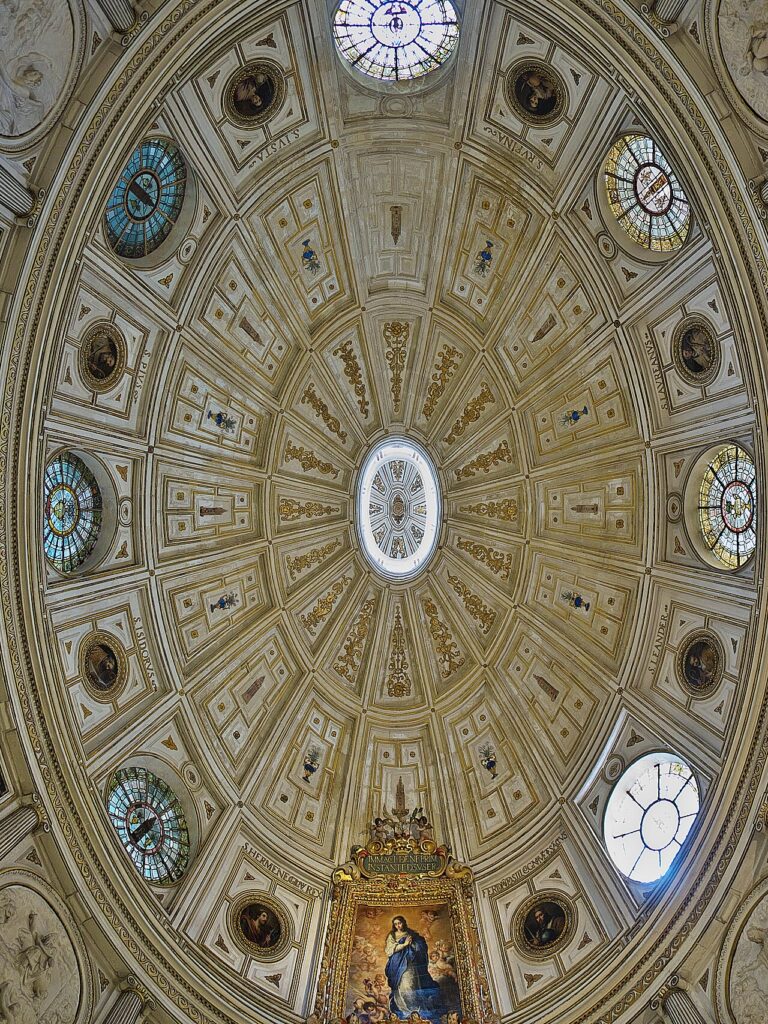
The Cathedral was all booked up for the whole month so I could not get inside photo the interior. I am therefore to use this wikipedia image above of the ceiling.
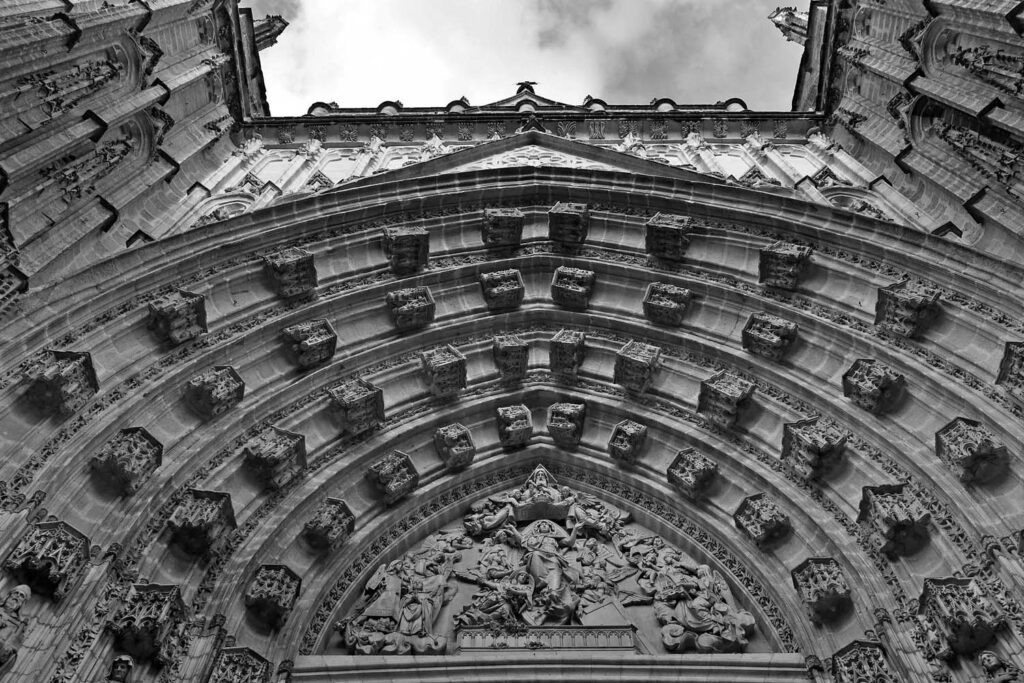
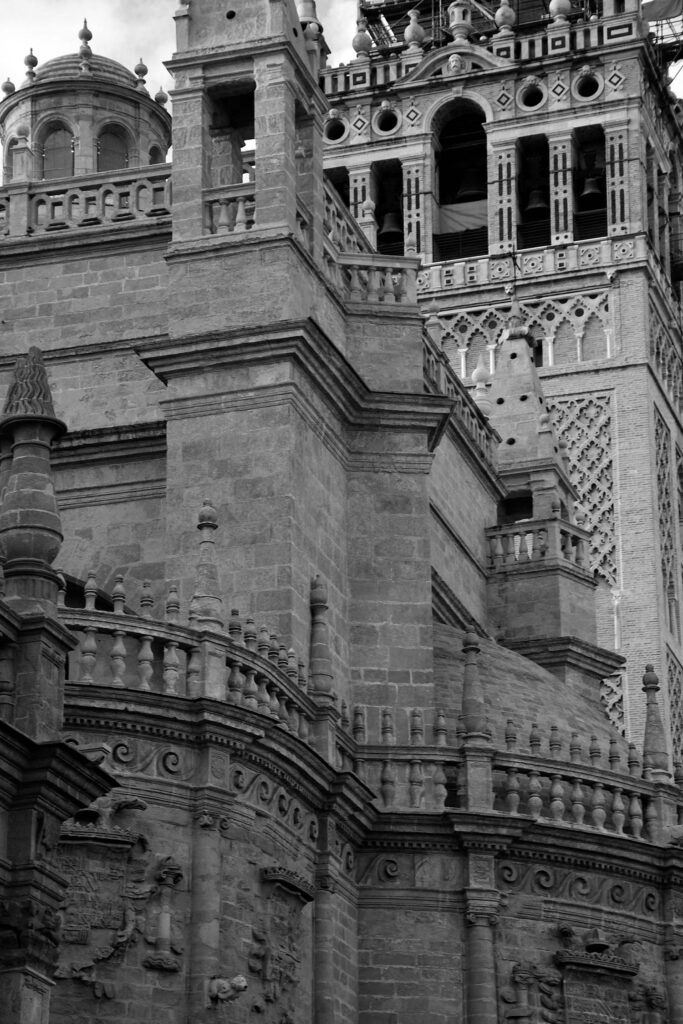
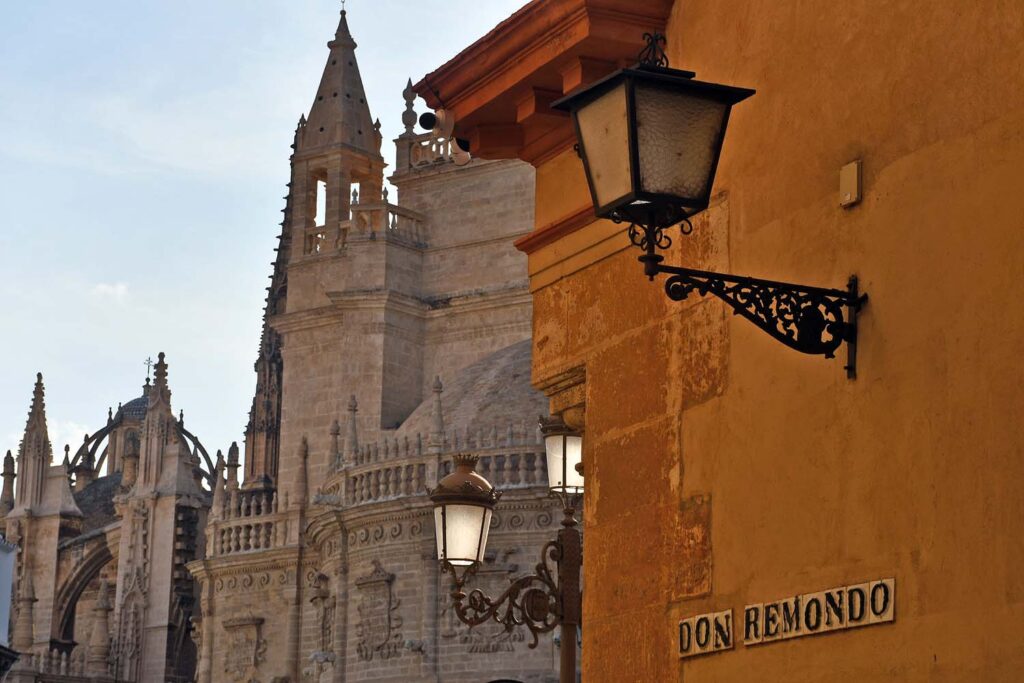
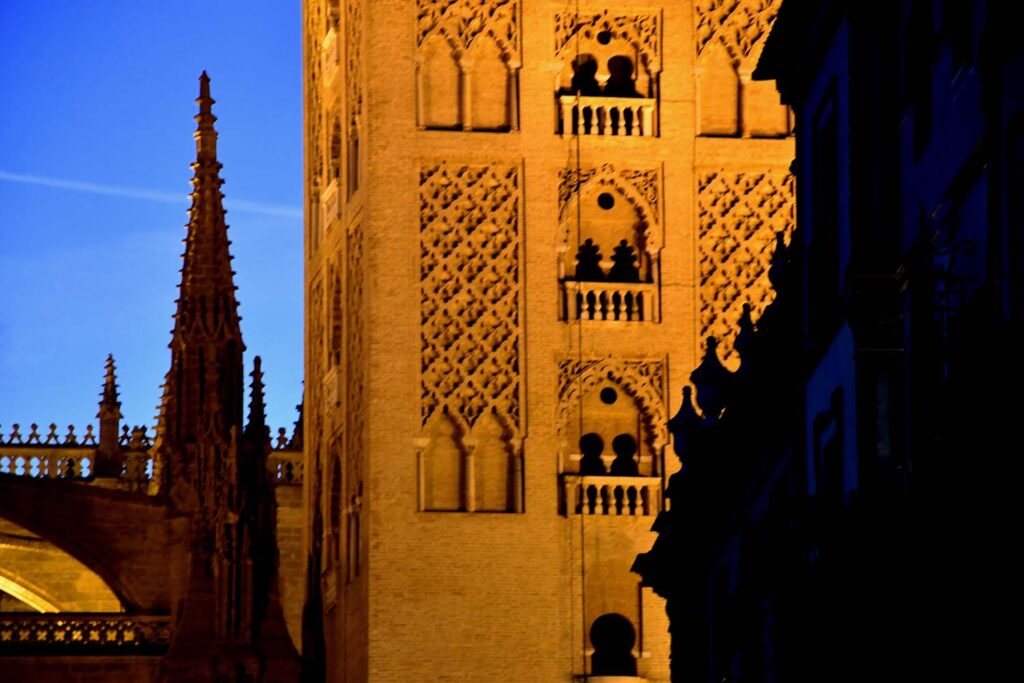
The Giralda is the bell tower of the Cathedral of Seville. The tower is the former minaret of the mosque that stood on the site under Muslim rule, and was built to resemble the minaret of the Koutoubia Mosque in Marrakesh, Morocco. It was started in 1184. It was converted into a bell tower for the cathedral after the Reconquista, although the topmost section dates from the Renaissance.
THE ALCAZAR
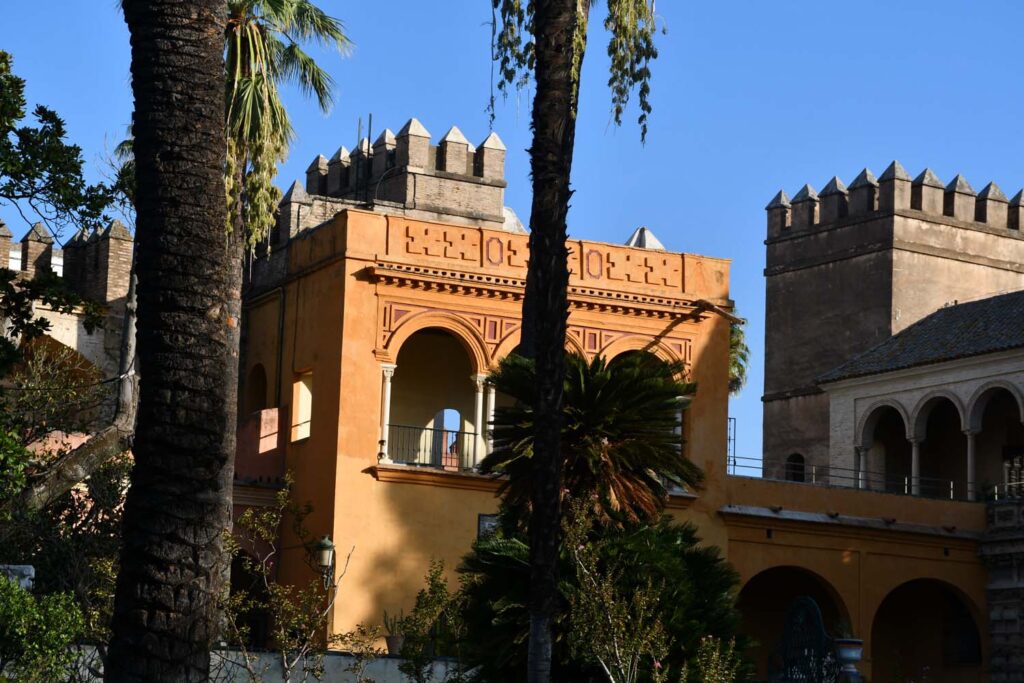
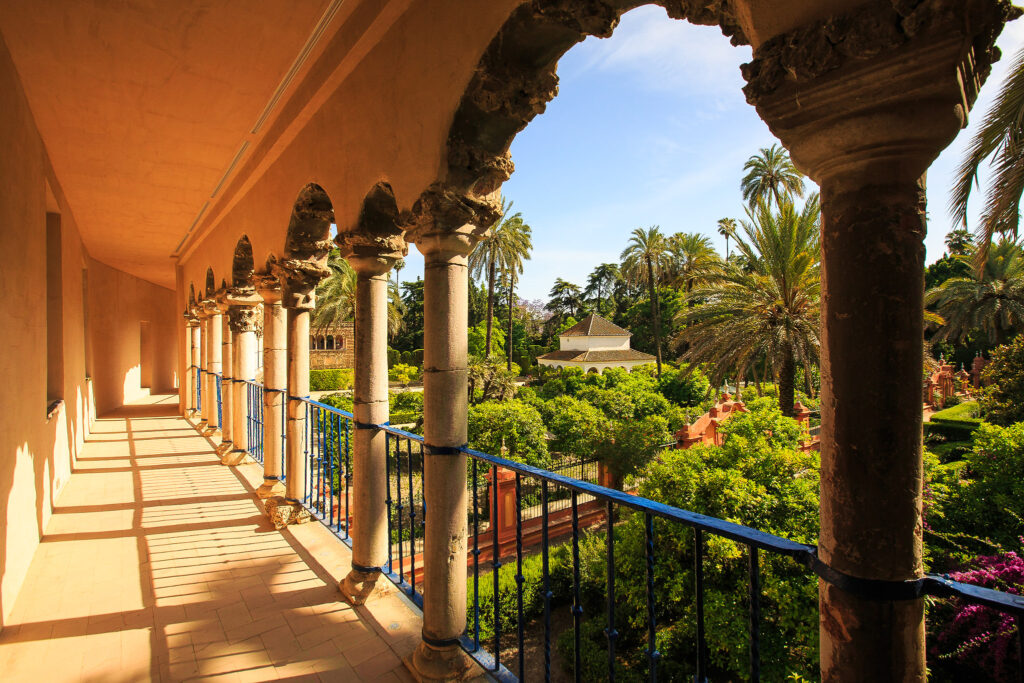
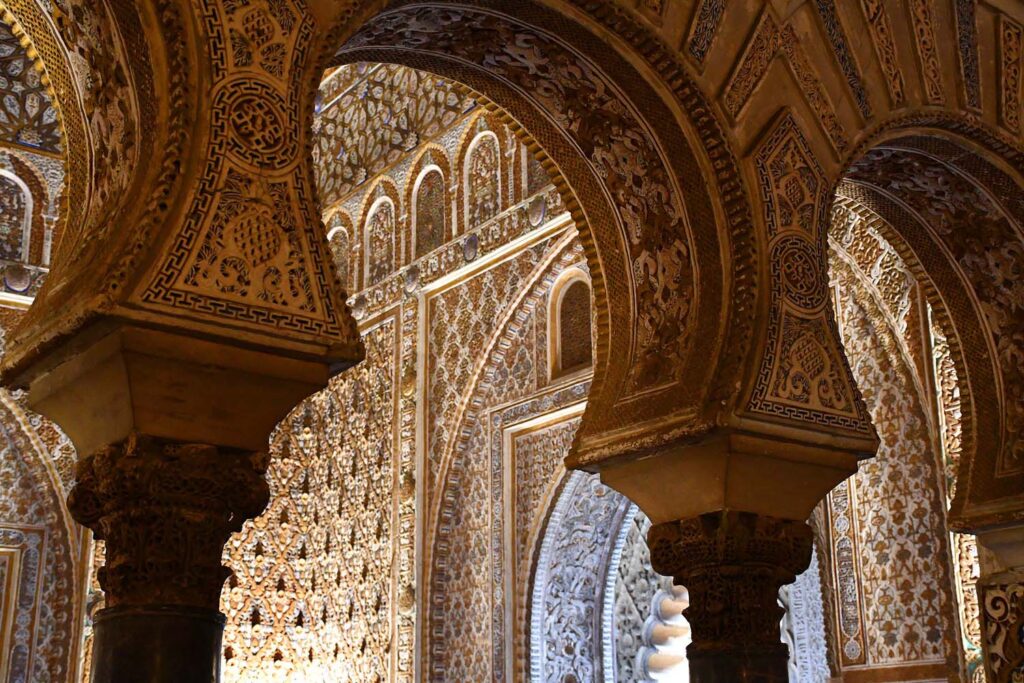
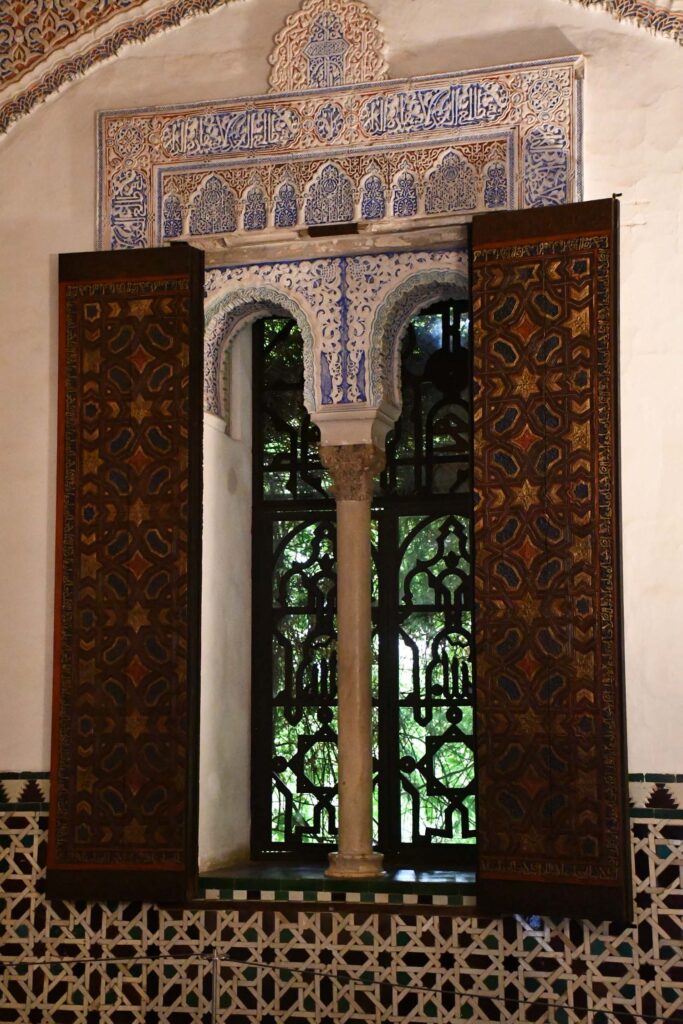
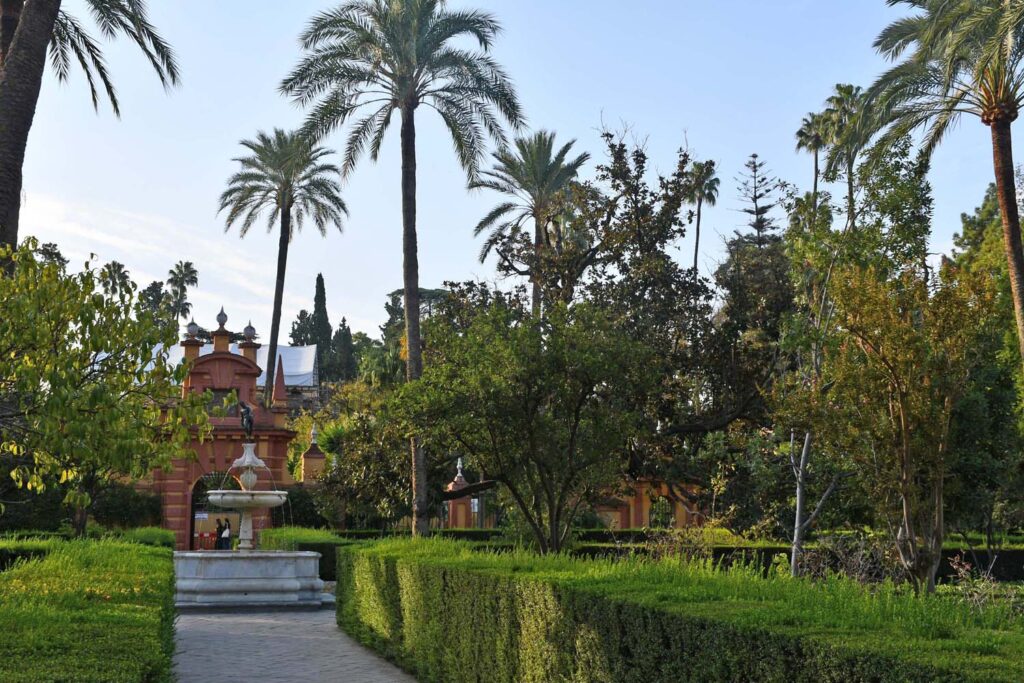
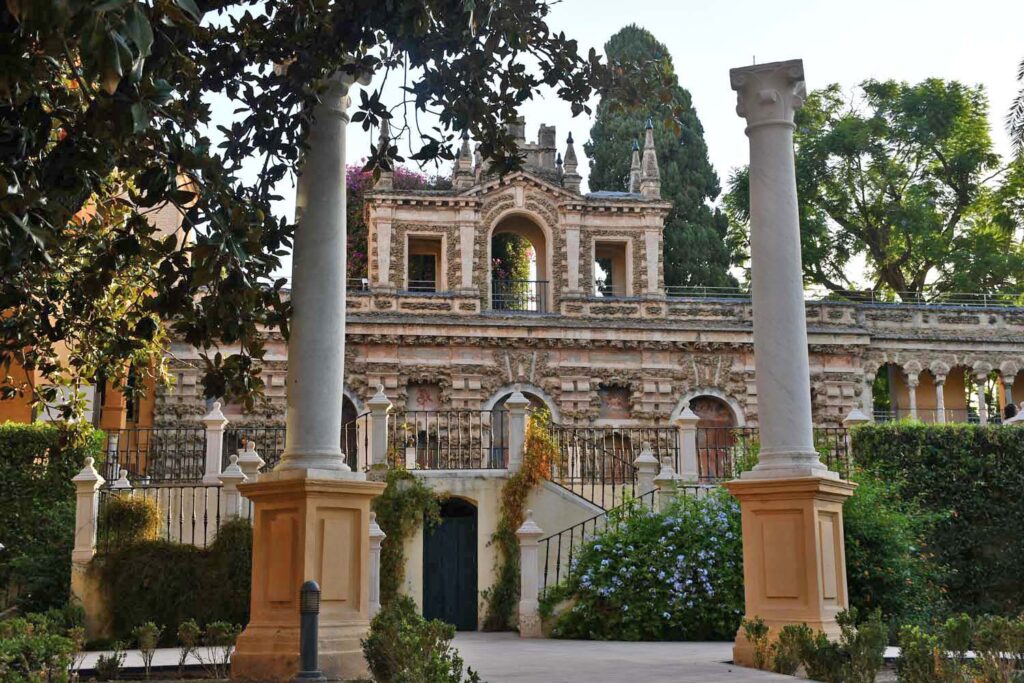
The Royal Alcázar of Seville is a historic royal palace in Seville, Spain and one of the official residences of the Spanish royal family. It was formerly the site of the Islamic-era citadel of the city, begun in the 10th century under the Umayyads and then developed into a larger palace complex by the Abbadid dynasty (11th century) and the Almohads (12th to early 13th centuries). After the Castilian conquest of the city in 1248, the site was progressively rebuilt and replaced by new palaces and gardens. Among the most important of these is a richly decorated Mudéjar-style palace built by Pedro I during the 1360s.
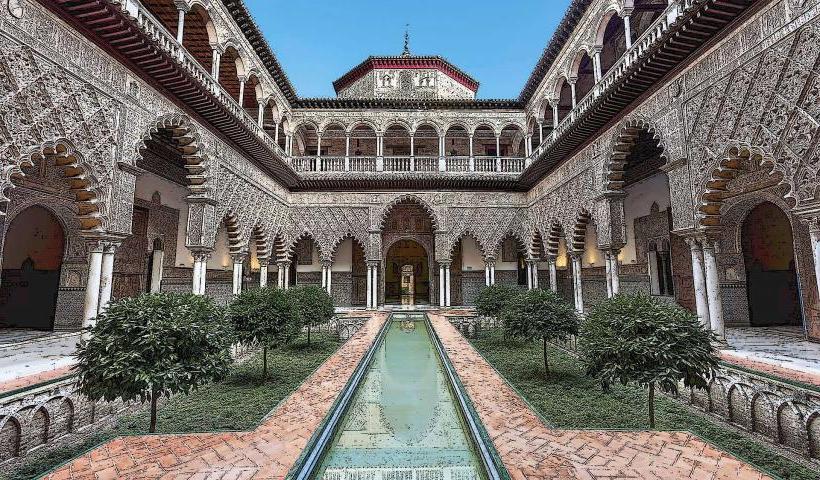
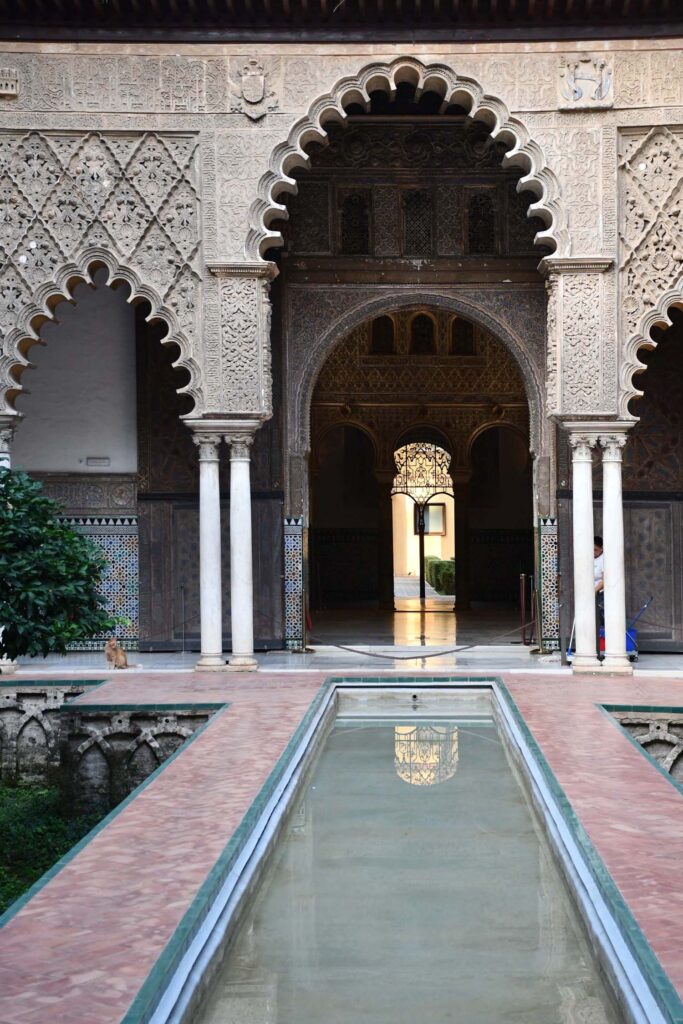
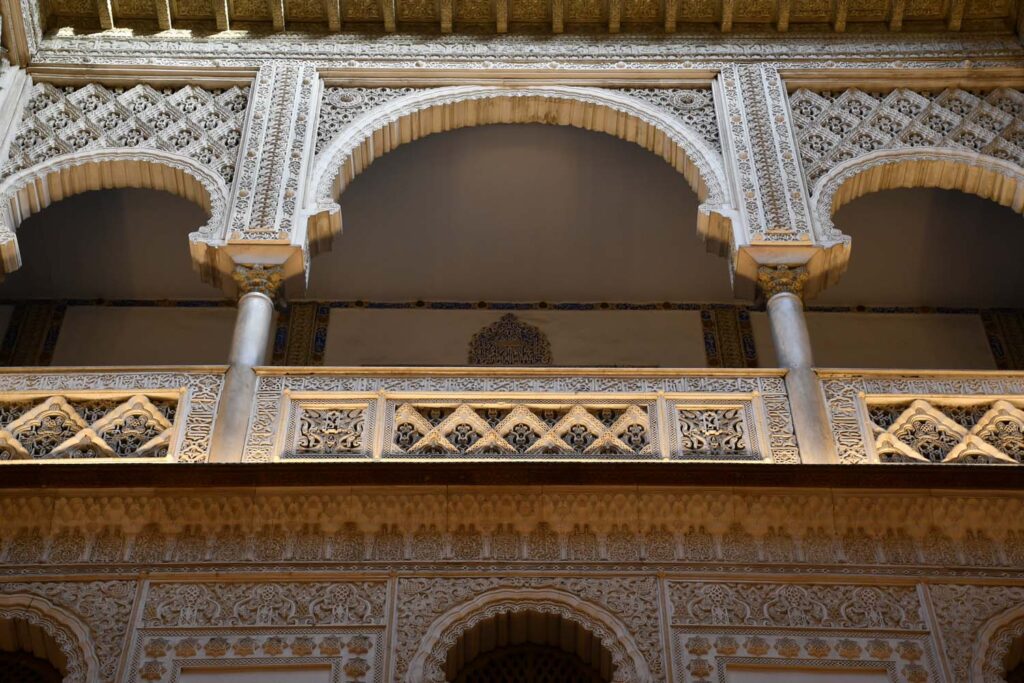
Patio de las Doncellas
The name, meaning “The Courtyard of the Maidens”, is a reference to the apocryphal story that the Muslim rulers demanded an annual tribute of 100 virgins from the Christian kingdoms of Iberia.
The courtyard was part of the Mudéjar palace built by Pedro I in the 1360s. The ground level of the building still dates to this period and contains Arabic inscriptions that refer to Pedro I as “Sultan Don Bidru”.The upper story of the courtyard was an addition made by Charles V. The addition was designed by Luis de Vega in the style of the Italian Renaissance although he did include both Renaissance and mudéjar plaster work in the decorations. Construction of the addition began in 1540 and ended in 1572.[46]
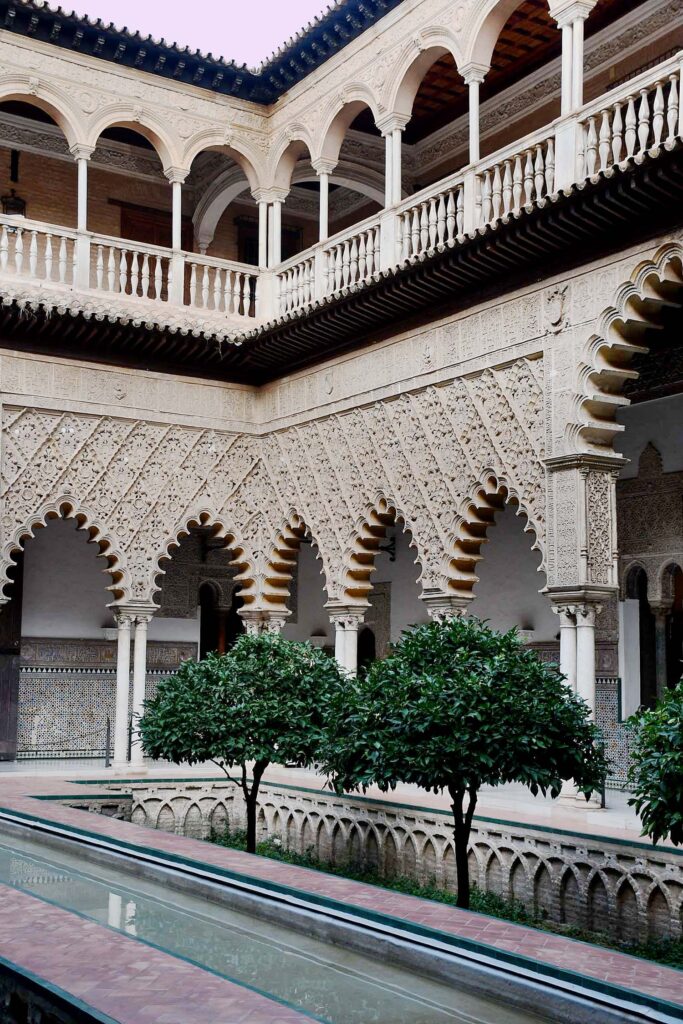
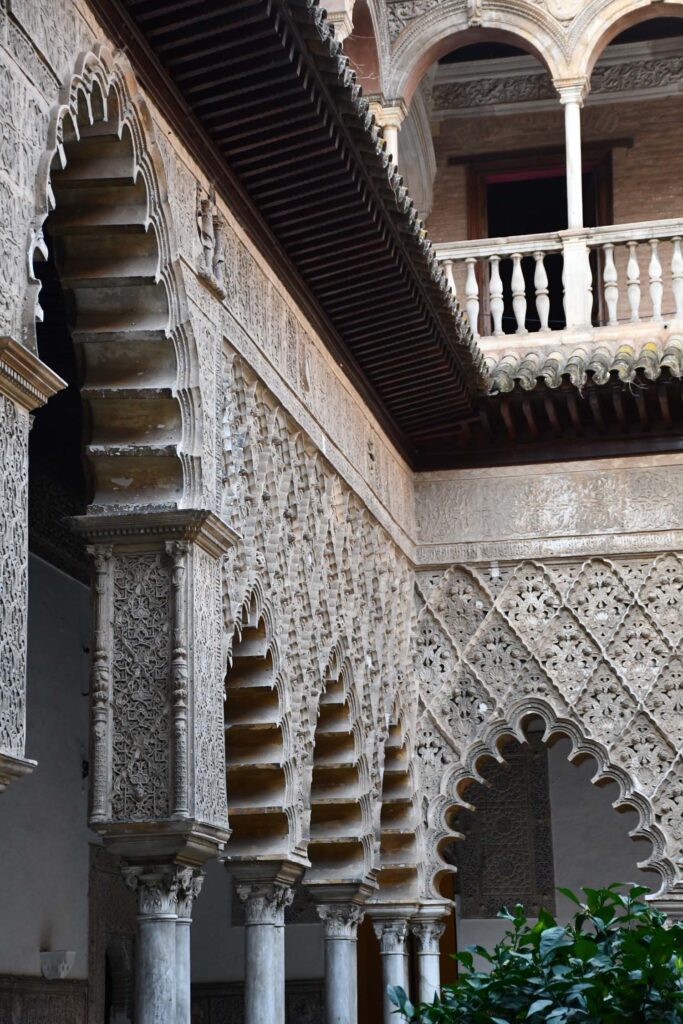
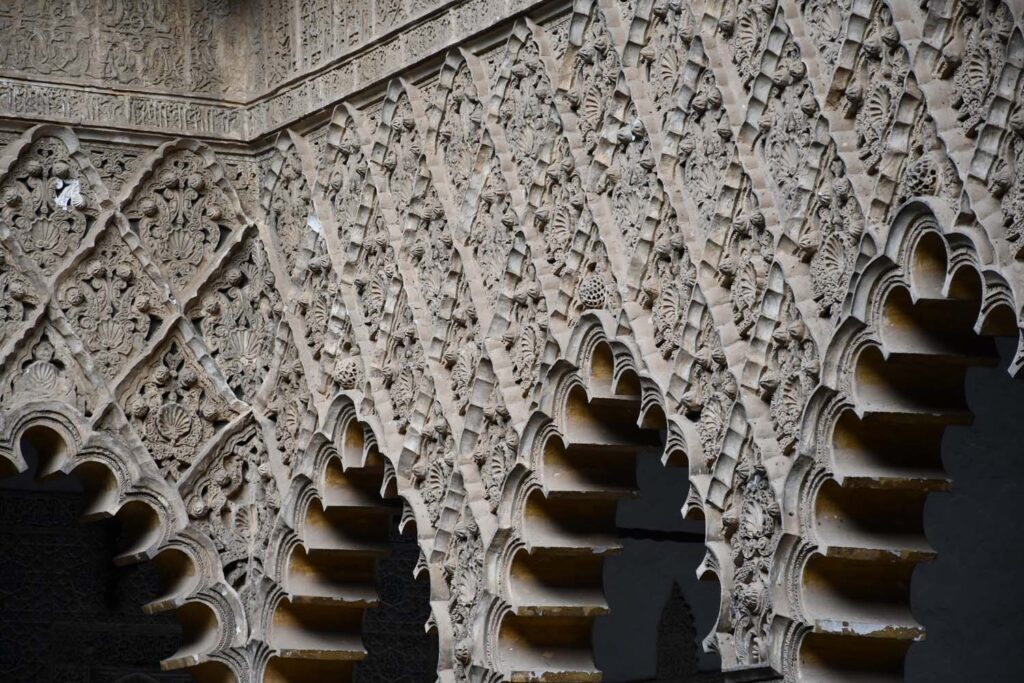
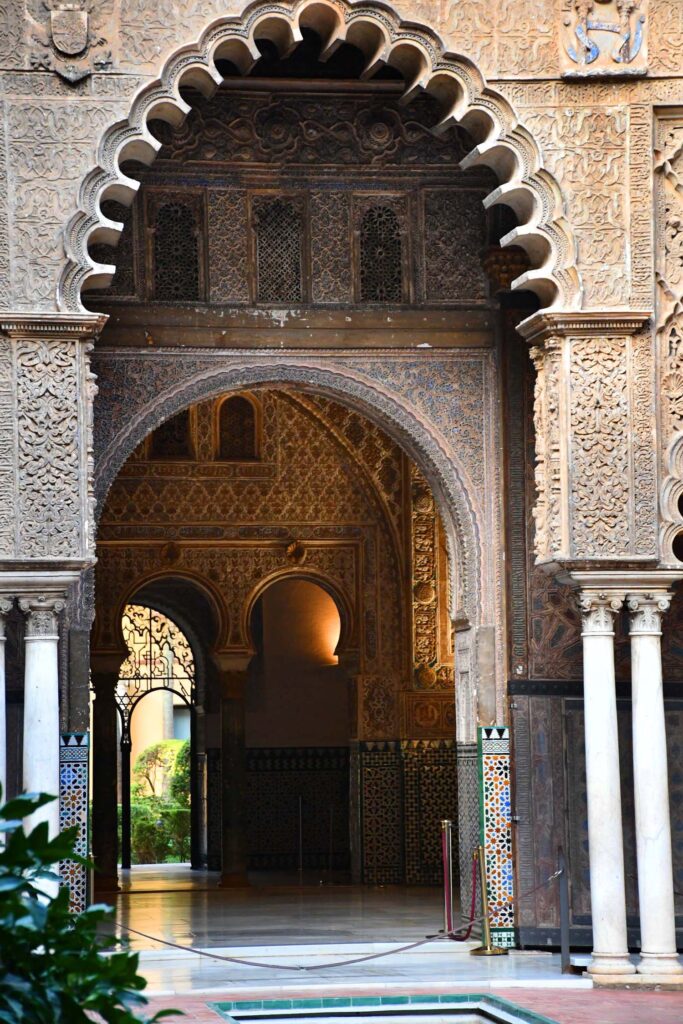
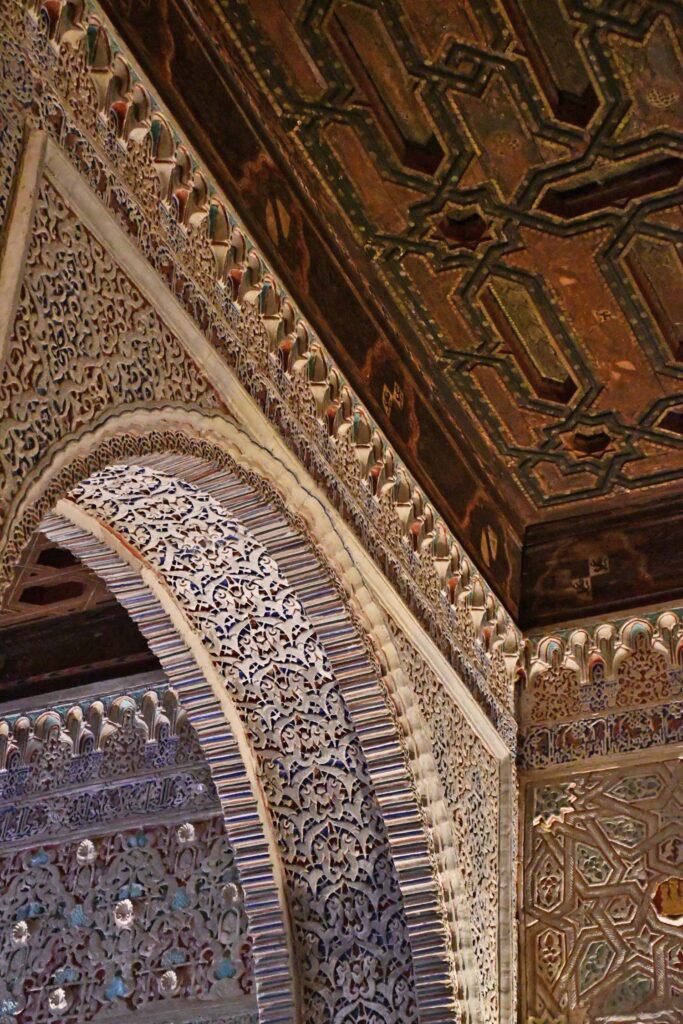
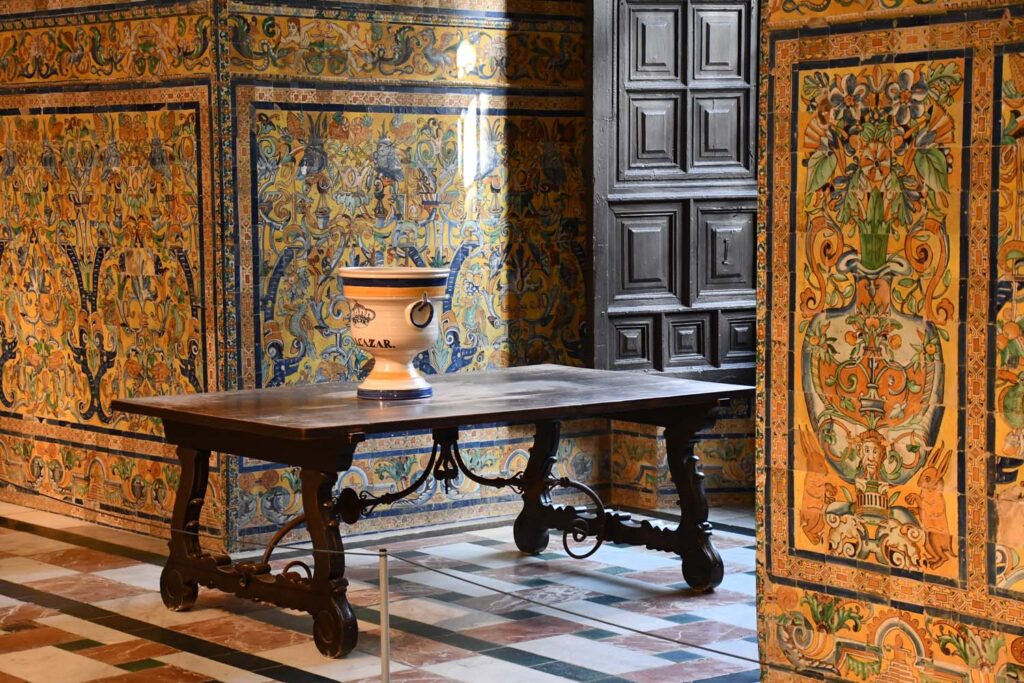
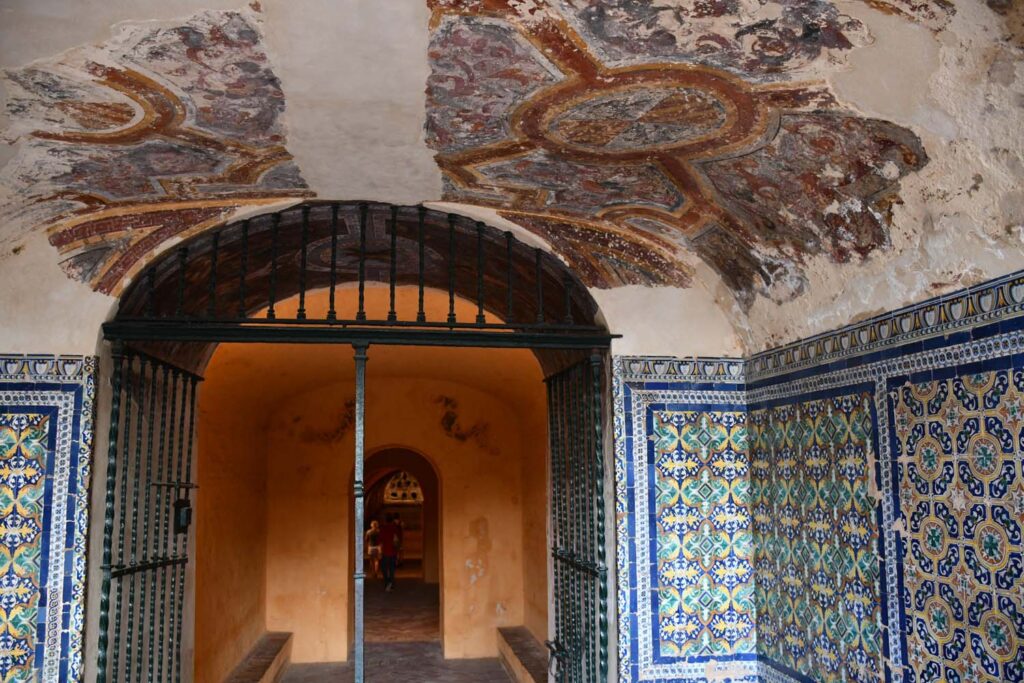
The palace is renowned for its ornate tile decoration, with tiles being either arista or majolica. In the arista technique, each tile is created by pressing clay into a mould—a process which creates tiles that have raised ridges and a three dimensional effect. By contrast, majolica tiles are flat and are created by painting design and color directly onto an opaque white background glaze. This technique was developed later than the arista process, during the 15th–16th centuries. As an important trade center, Seville had easy access to a wealth of producers of tiles which were mainly of geometric design inspired by arabesque ornamentation.
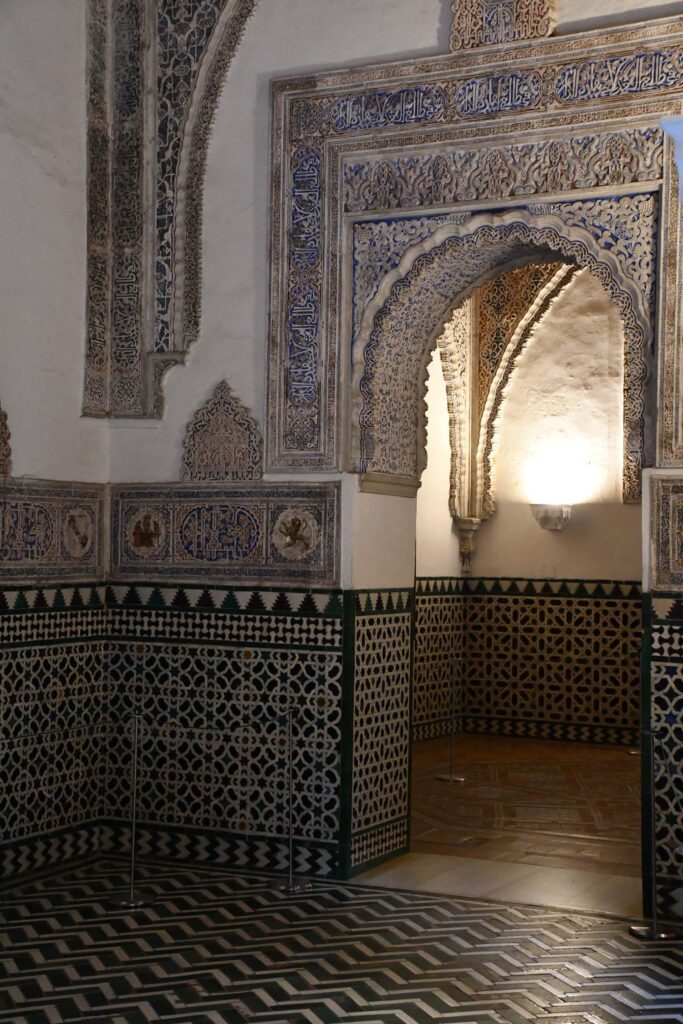
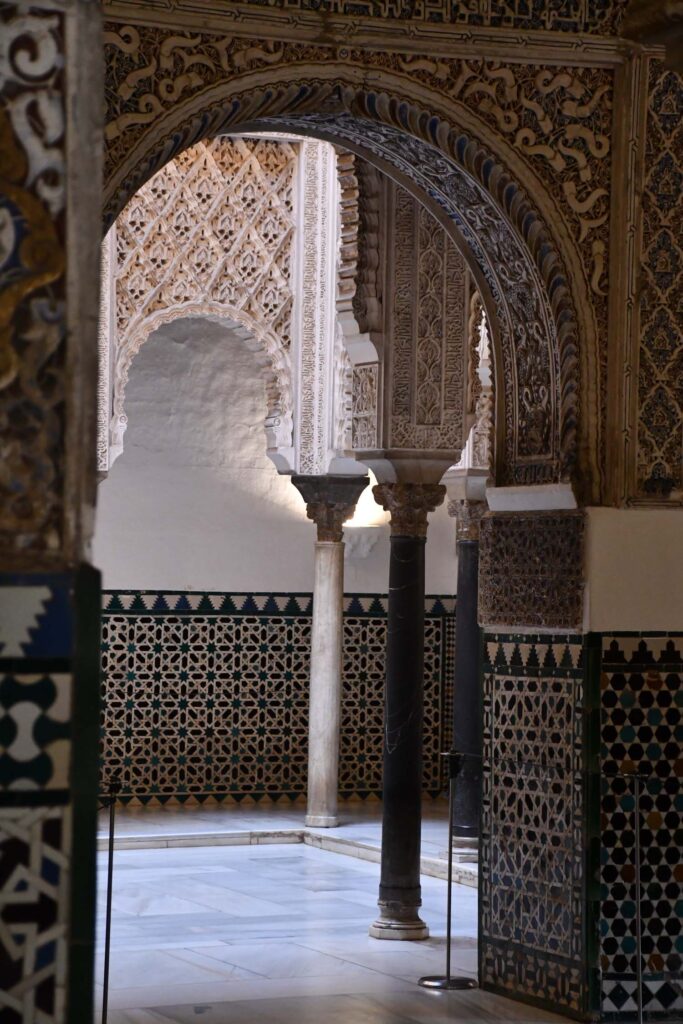
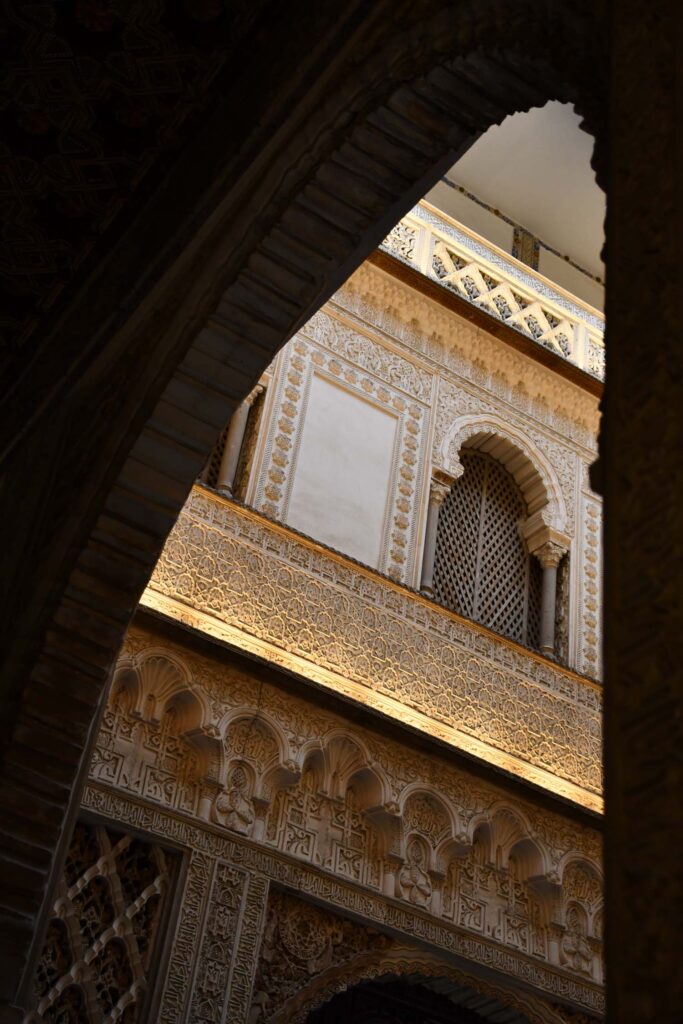
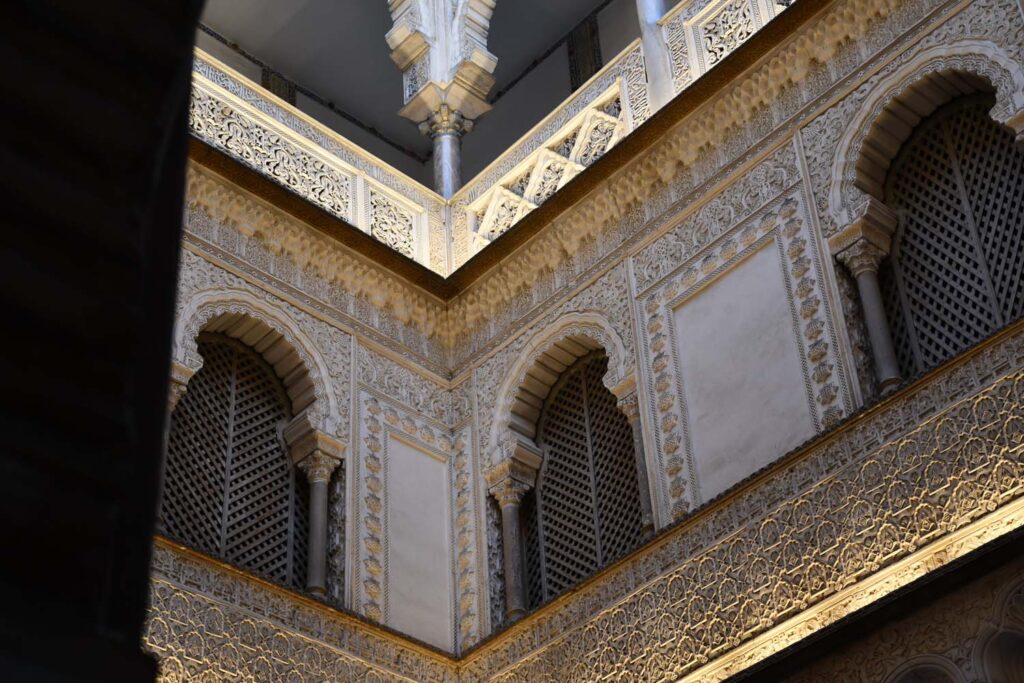
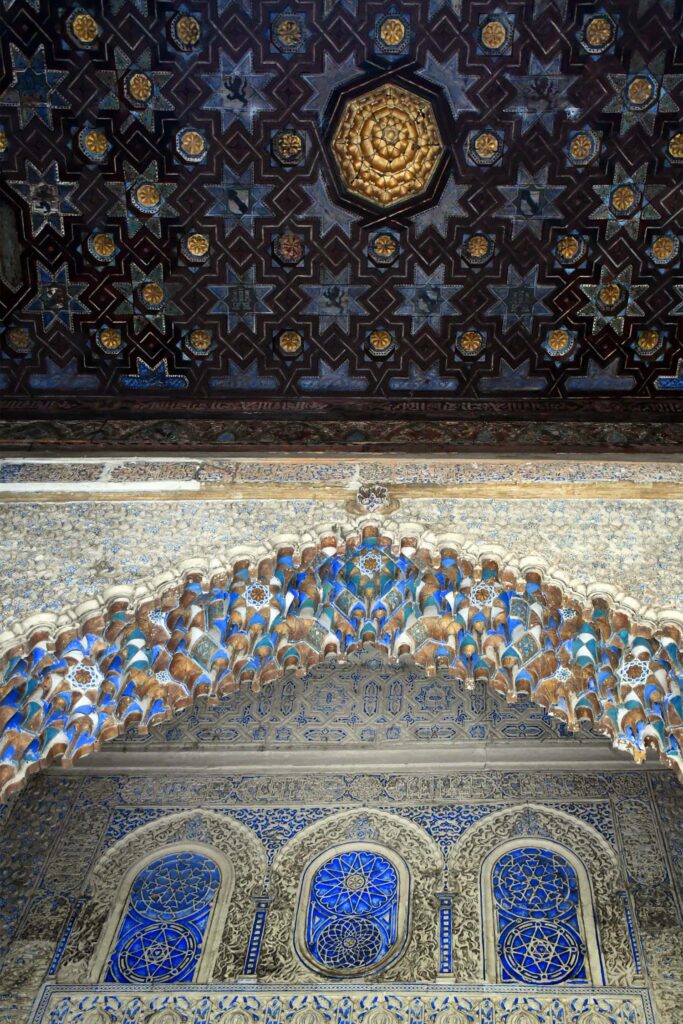
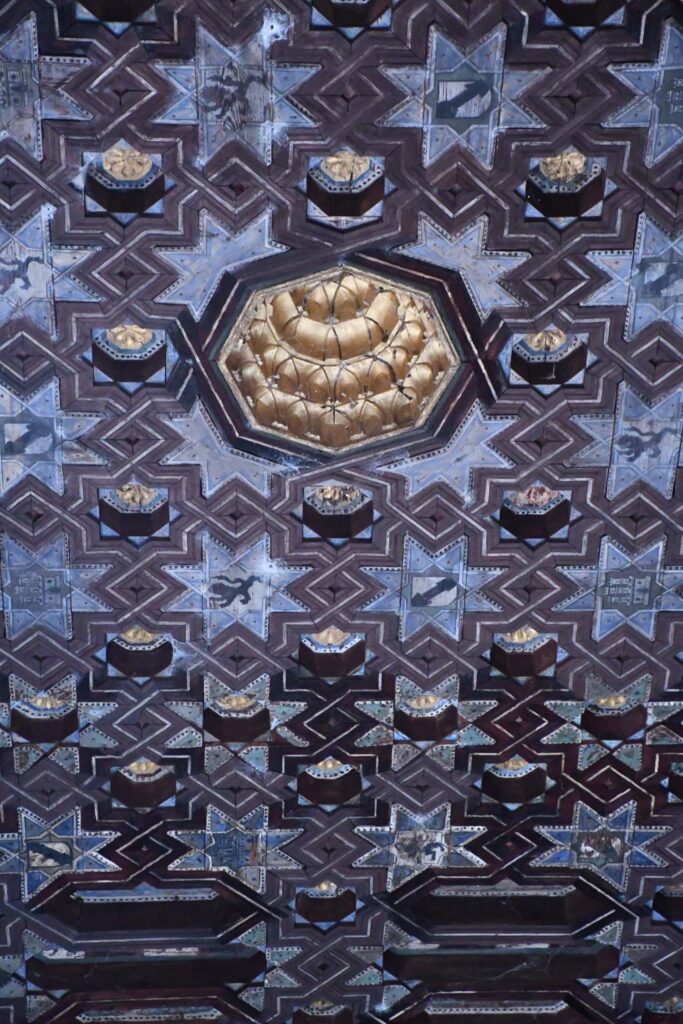
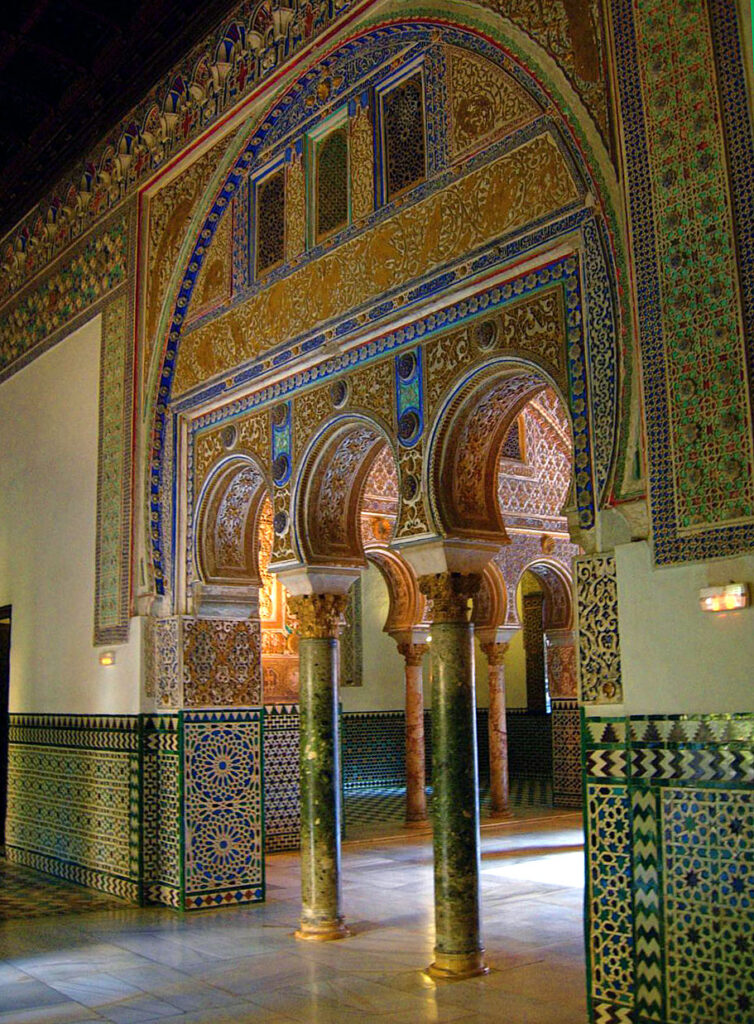
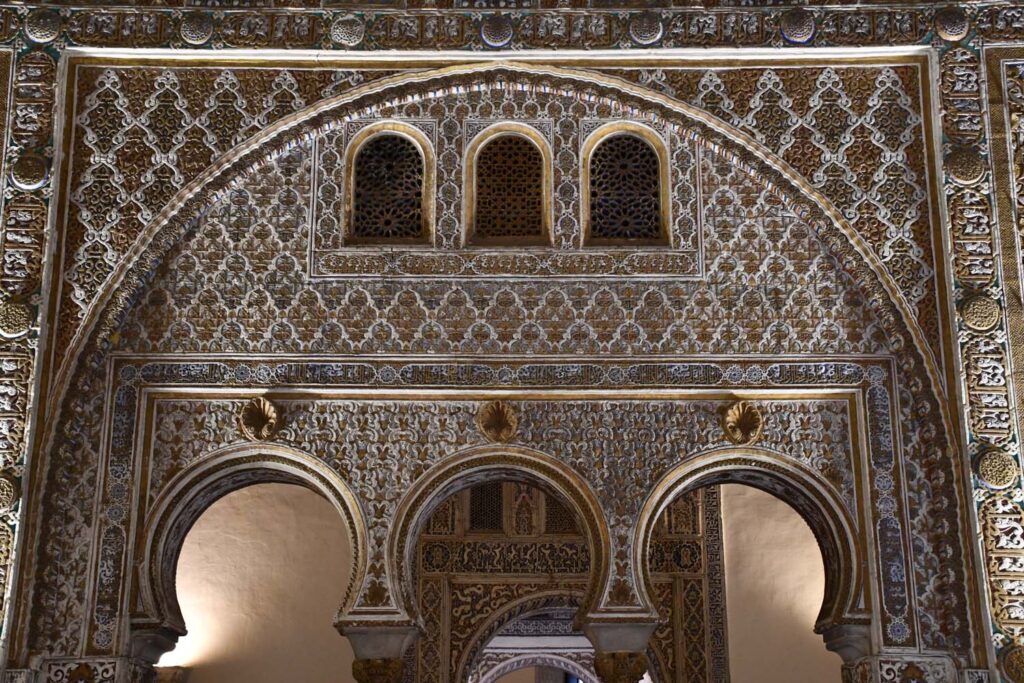
Above- Entry way to The Hall of the Ambassadors (Salon de los Embajadores) dates from the 14th century, when Pedro I of Castile made it a centerpiece of his new royal palace.
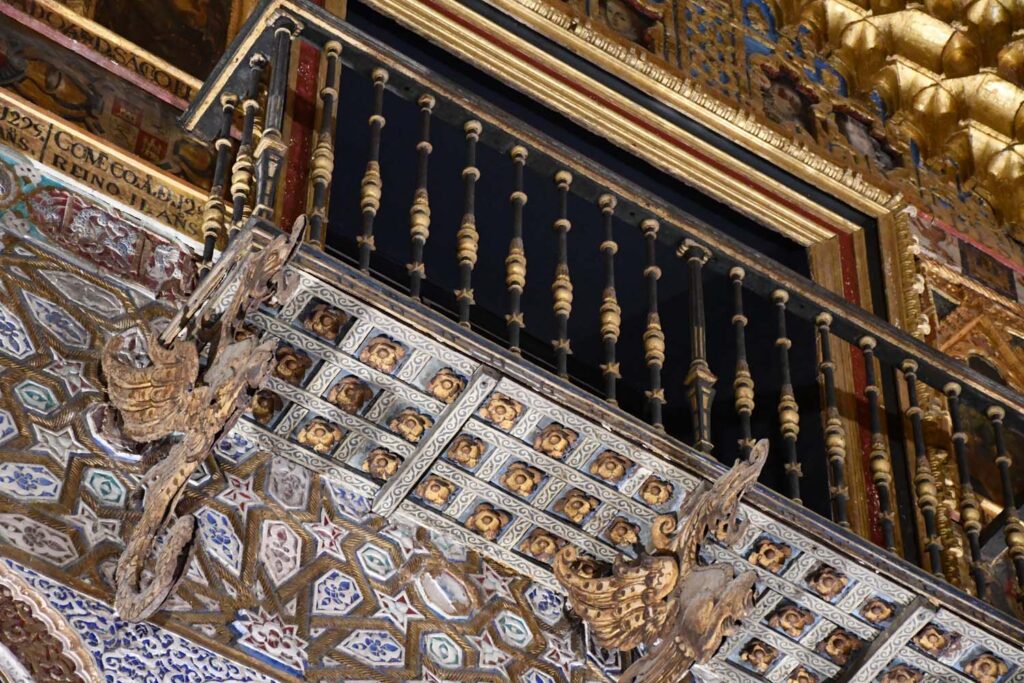
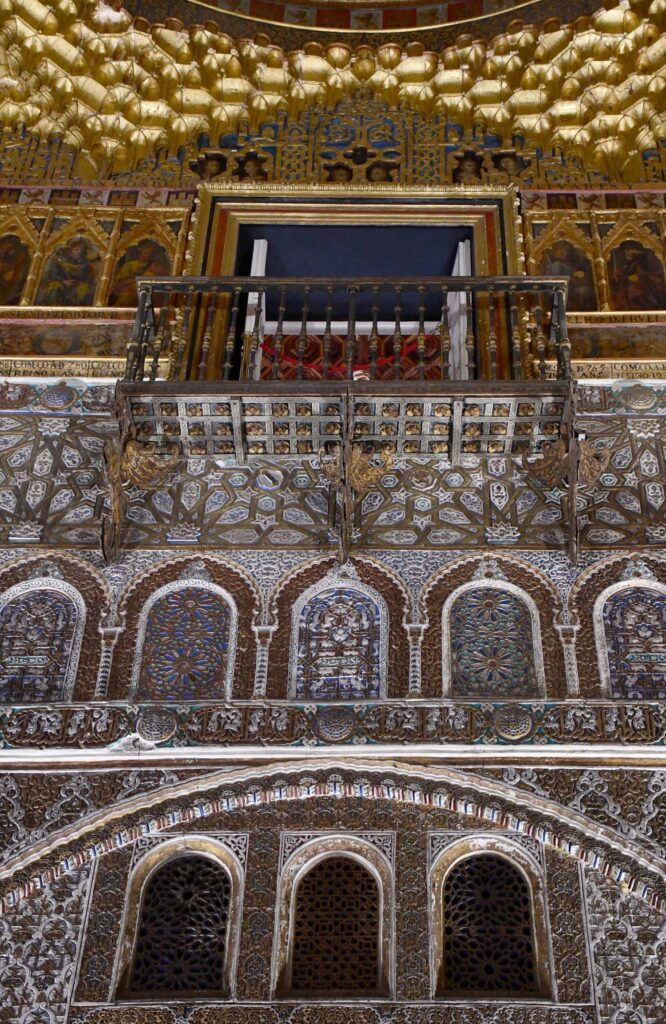
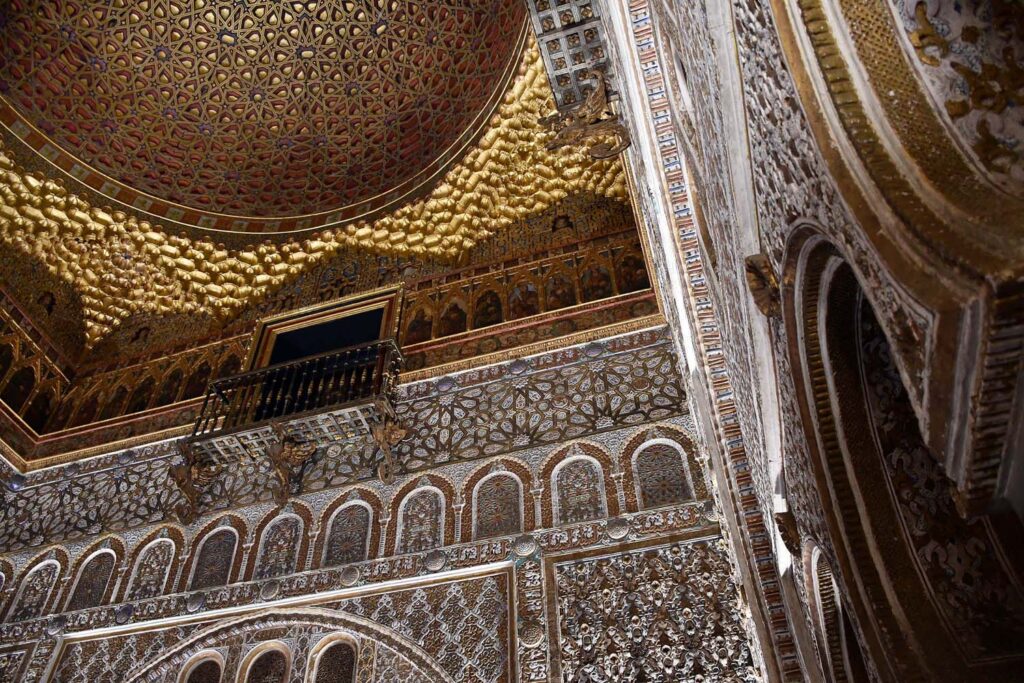
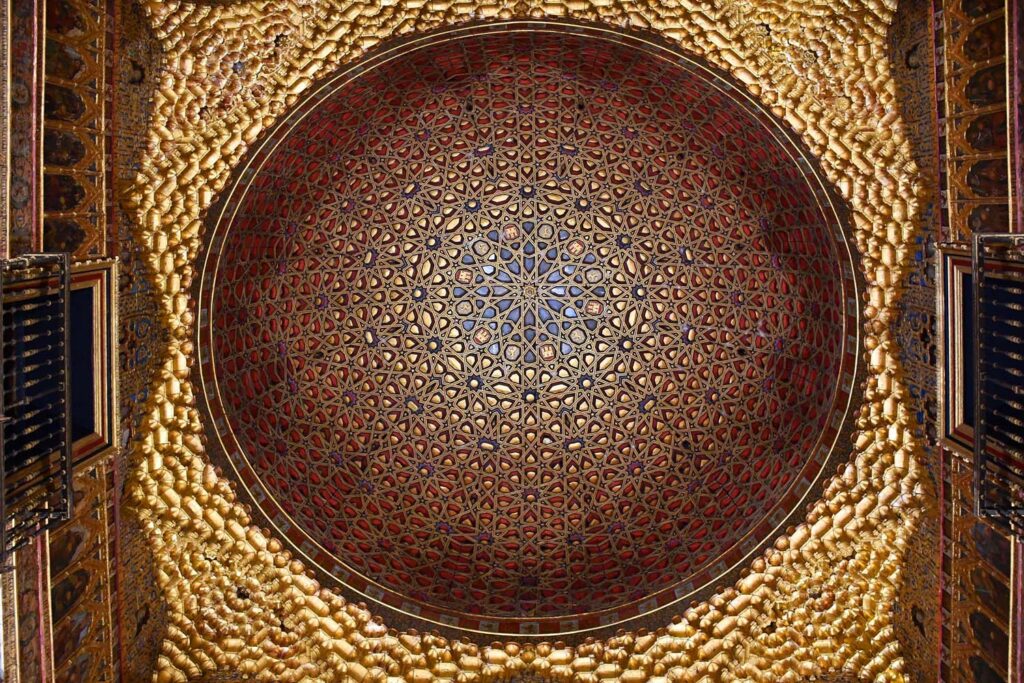
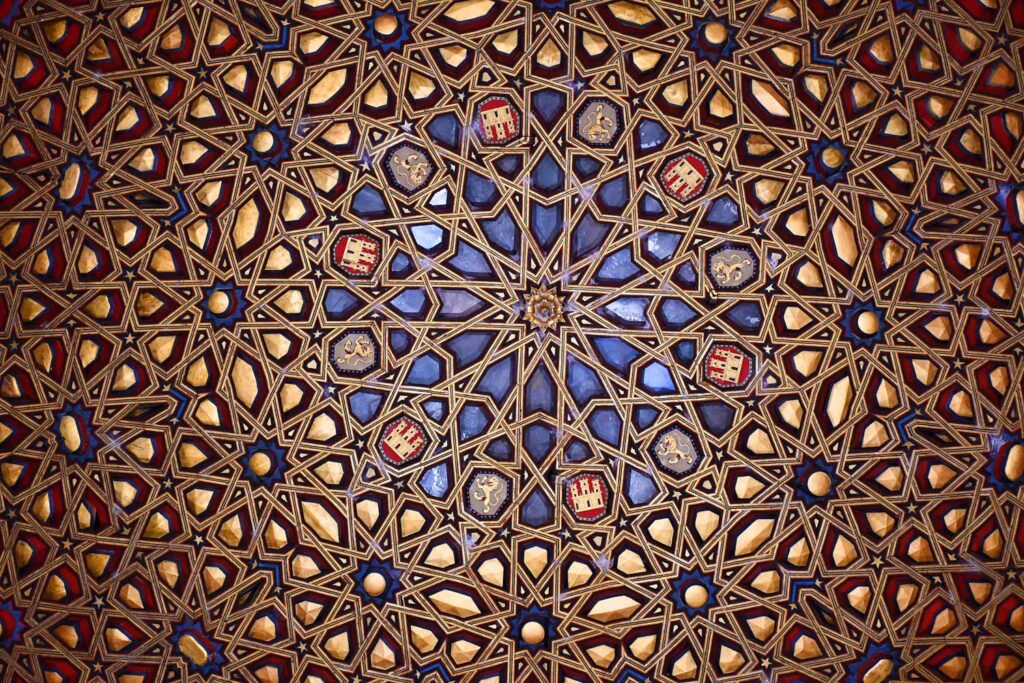
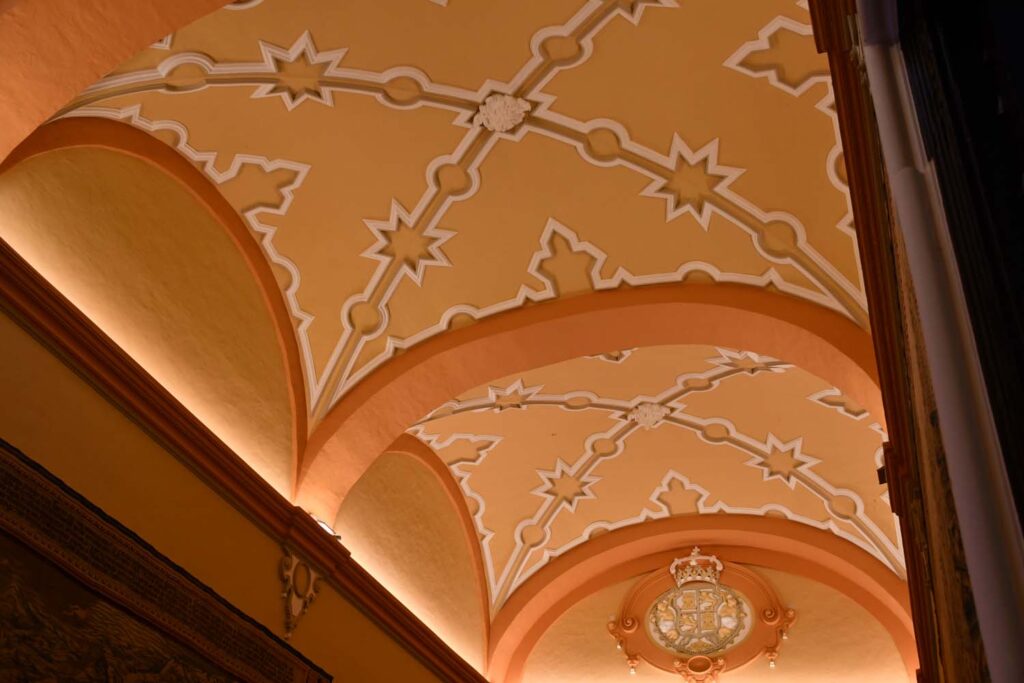
Ceiling of the Hall of the Ambassadors.
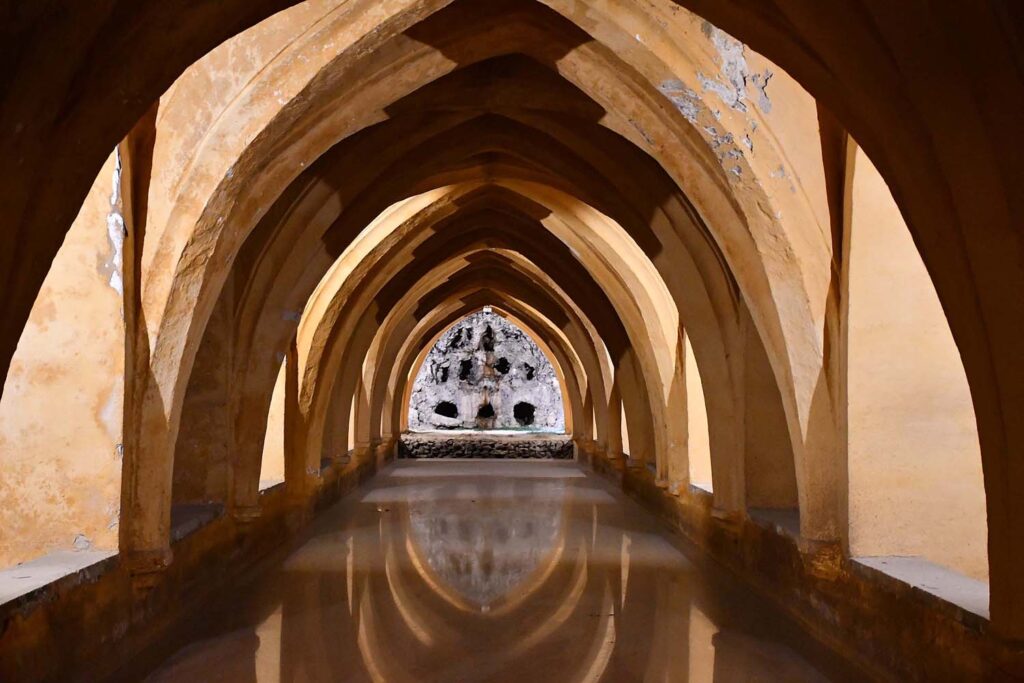
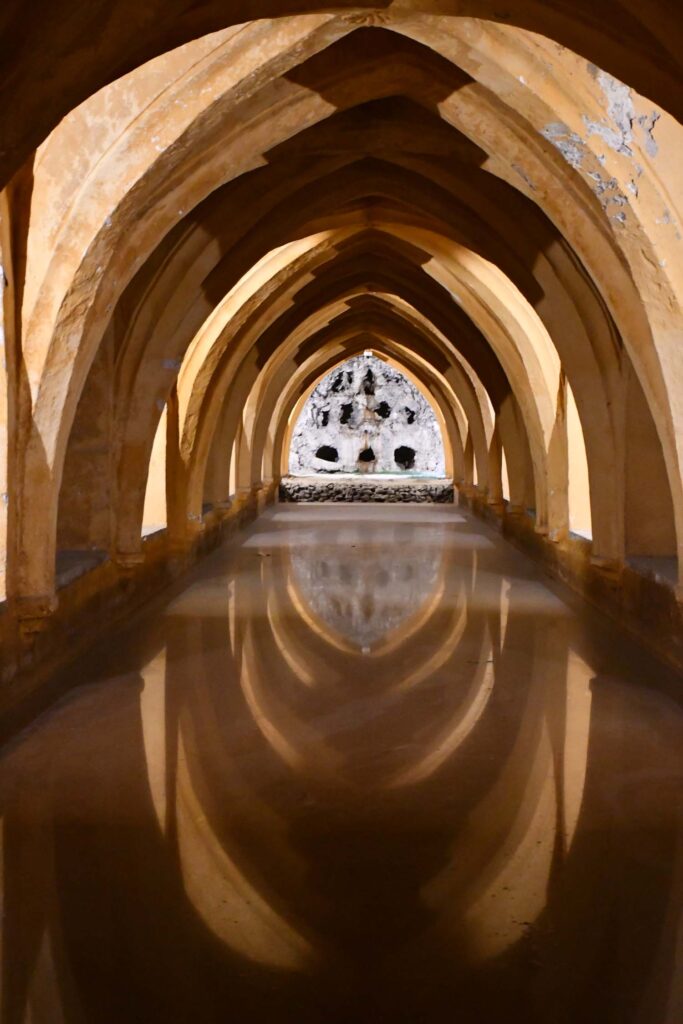
Los Baños de Doña María de Padilla
The Baños de Doña María de Padilla (“Baths of Lady María de Padilla”) is a chamber located in a basement beneath the Patio del Crucero. It is named after María de Padilla, the mistress of Pedro I.